
Facebook Post July 13, 2021:
Charleston. Wow! Once the wealthiest city in America. Why, because of the slave ships coming from Africa.
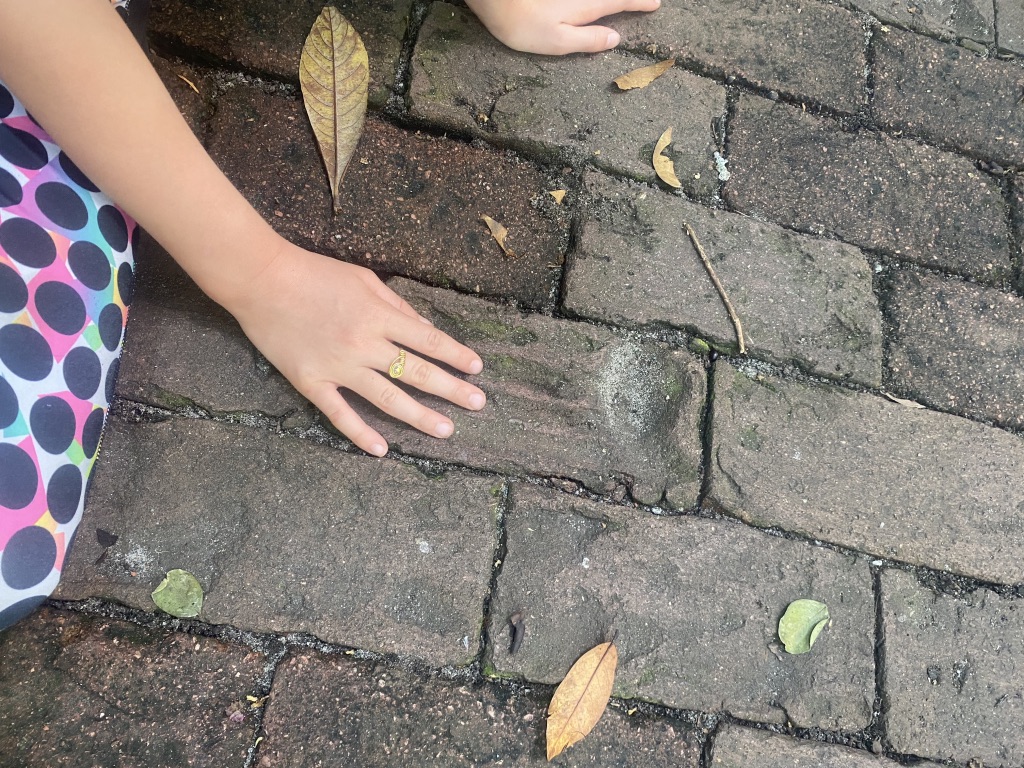
The first stop we made was a small, quaint alleyway where the bricks along the ground were made at a local enslavement camp, AKA a plantation. The bricks were formed by enslaved Africans and often picked up before they had cooled off and formed properly. So as you walk this alleyway you can find many handprints and fingerprints. many very small nearly the size of my own children’s hands, where the enslaved people would have picked them up. It is a deeply powerful experience to put your hands against the fingerprints of those who formed the bricks there.
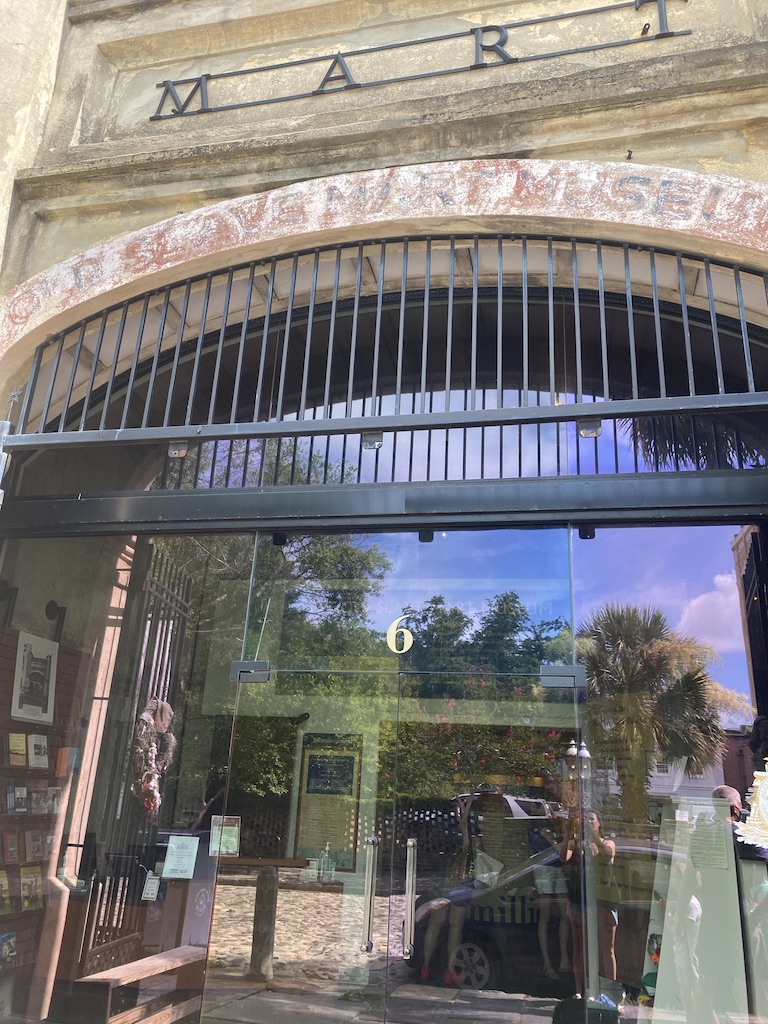
We also visited a museum that was formally Ryan’s Mart, a slave market. Did you know that after public slave auctions were banned 40 privately owned slave marts sprang up in a four block radius in Charleston? Yes! 40 privately owned slave marts in a 4 block radius!!!
Very few people actually held enslaved people captive, only the wealthiest people in the south could afford to do so. However those people would often traffic quite a lot of enslaved people amongst themselves. In fact Ryan’s mart alone had 10,000 people come and go through its doors within a seven year. Mind blowing!!!
Philadelphia Alley
Stretches 1 block, running north from Queen Street to Cumberland between Church St. and State St.
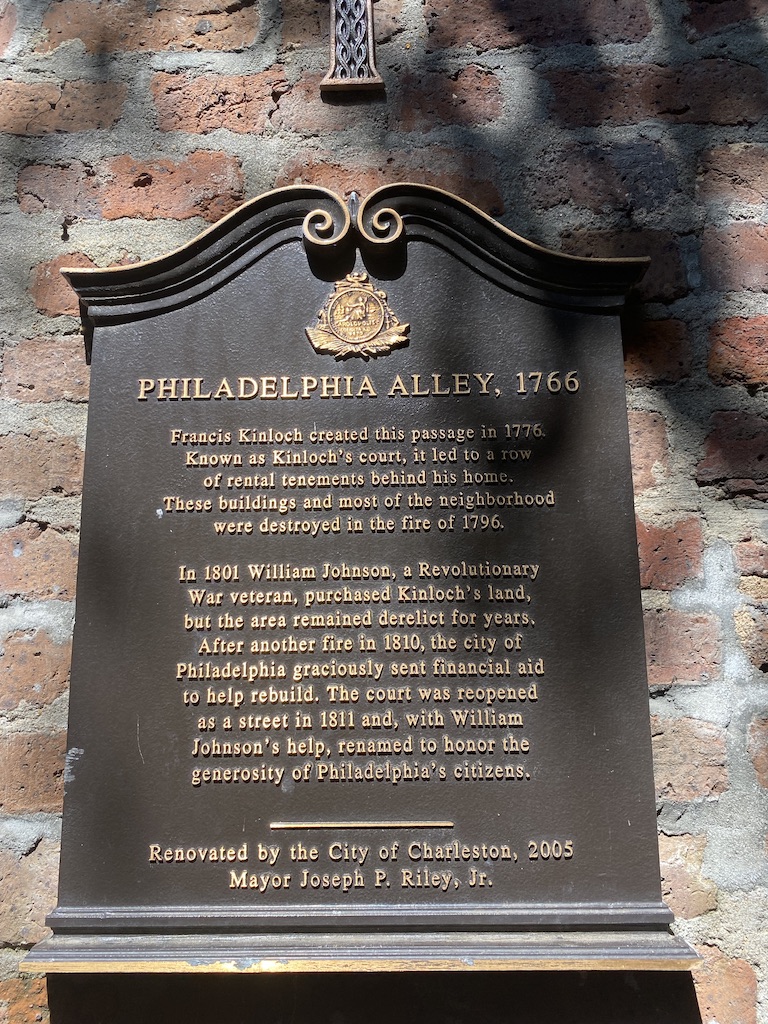
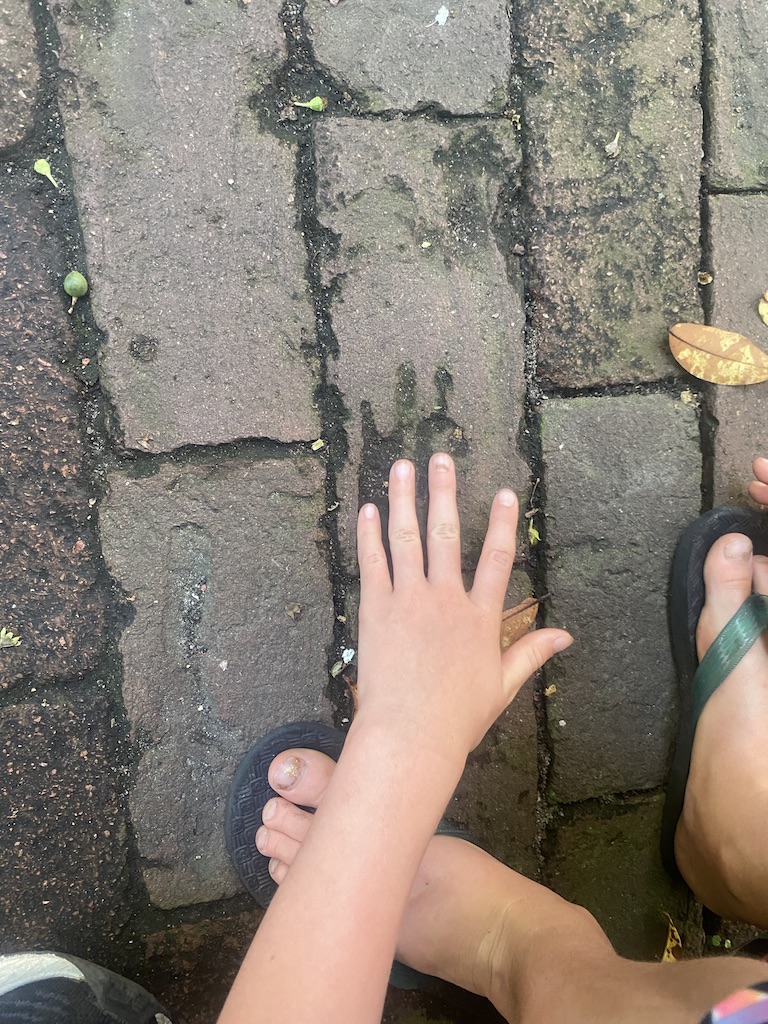
Perhaps the most haunting location we visited was Philadelphia Alley. Once you begin to unveil this gorgeous city’s history, having been built by the hands, sweat, and blood of enslaved, kidnapped, trafficked humans, it’s not surprising to realized (as horrifying as it is) that young children had an important role in the construction of the buildings and roads. Philadelphia Alley holds the fingerprints of some of the enslaved children, whose job it was to form and turn the cooling bricks. Occasionally the bricks would be handled before they had cooled completely, leaving tiny finger prints on them. So, tiny in fact that our petite 8 year old daughter’s fingers were larger than some of the fingerprints. This city, Charleston, inarguably one of the most gorgeous and grand of American cities, was built by children who had been ripped from the parents ams, or even bred for this unpaid, dangerous manual labor.
Old Slave Mart Museum
6 Chalmers St. Charleston, SC 29402, (843) 958-6467
Hours: Monday – Saturday 9 am – 5 pm
Admission: Adults (18+) $8, Children (5-17) $5, Children under 5 FREE
Right around the corner from Philadelphia Alley is Ryan’s Slave Mart, which was built in 1859 by Thomas Ryan in response to public slave markets becoming illegal. In order to continue to profit on human cargo, 40 privately owned slave markets opened within a 4 block radius in Charleston. Although the slave mart only sold kidnapped humans until 1863 (when the Emancipation Proclamation was signed) the number of people who were imprisoned and sold there is tremendous, estimated around 10,000. Upon buying the property Ryan converted a four story tenement building into a “baracoon” or slave jail, a kitchen, and a “dead house” or morgue. Humans were typically sold nude so that perspective buyers could see if they had scars from being whipped, which would indicate how submissive the person had been for previous captors. Most of the sales were done in the back yard, out of view of the street.
In 1963 Miriam B. Wilson bought the property and converted it into a museum of African American art, history, and culture. Judith Wragg Chase and Louise Wragg Graves acquired and maintained it from 1964 to 1987. At which time the city of Charleston obtained it and it officially opened as a museum in 2007
Sullivan’s Island
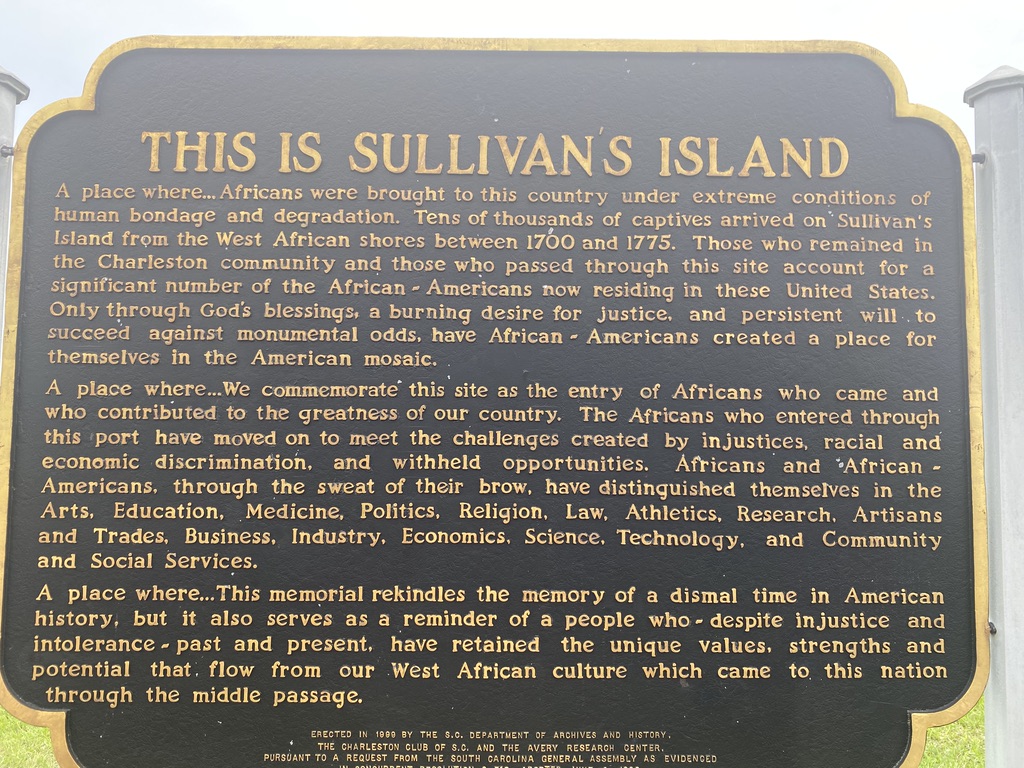
Sullivan’s Island is often referred to as the “Ellis Island of Slavery”. It is the site of forced entry into the United States for an estimated 40% of all enslaved Africans, and about 40% of African Americans who are descendants of enslaved people. While no one knows the exact location the ships landed to unload their human cargo, the island carries the untold horror stories of hundreds of thousands of kidnapped humans. Some historians estimate that around 260,000 African slaves on 882 ships came through Charleston Harbor. In addition to being the port of entry, it was also home to the Pest Houses, brick buildings about 10′ x 30′, where the enslaved who appeared to be sick or diseased were sent to quarantine upon entry into America.
Years later, during the Revolutionary War, between 20,000 and 25,000 enslaved Africans escaped to Sullivan’s Island, however after promises of being freed upon arrival by the British many of them were taken by the Brits, and others were forced to fight in the war. Because of the massive influx of Africans to the island The Council of Safety in Charleston ordered an attack on the island to destroy the enslaved peoples’ camp. The army, led by William Moultrie (the man that the fort on the island is named in honor of), killed about 50 Africans who refused to surrender and took all of the remaining runaways back into captivity.
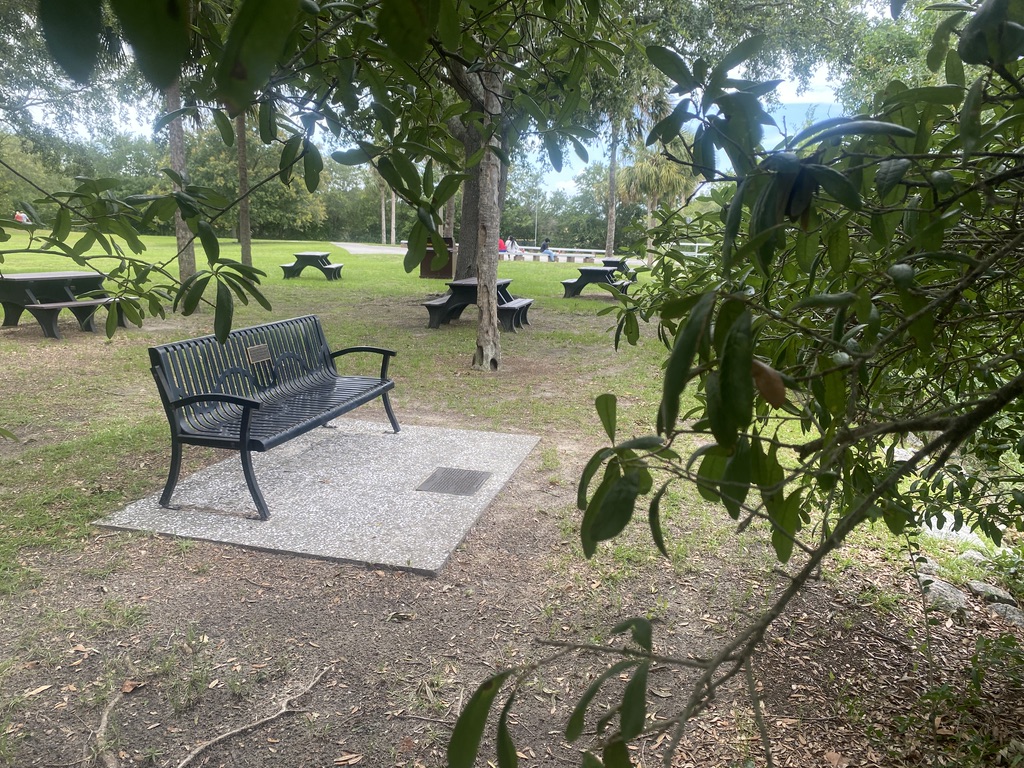
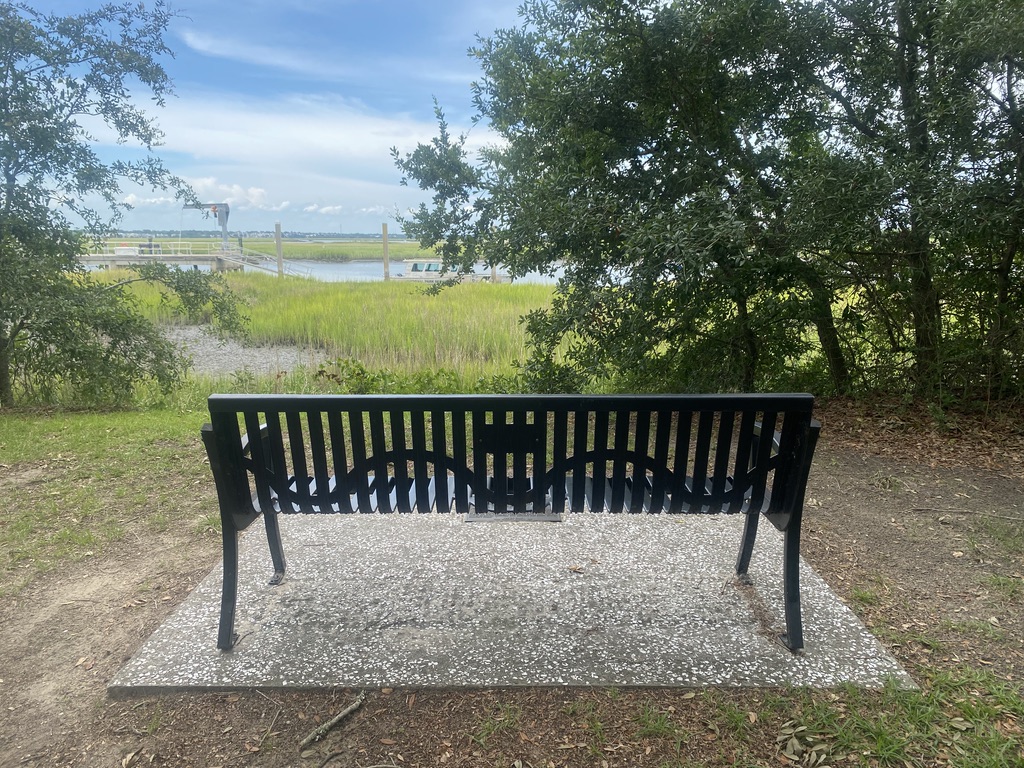
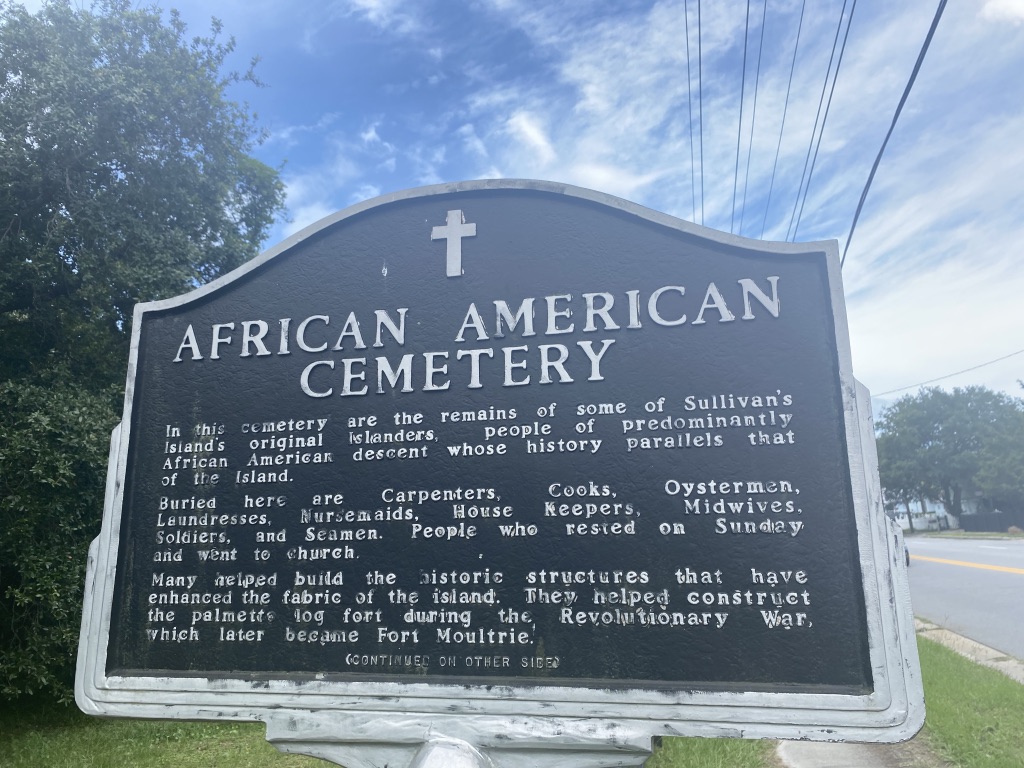
The only two markers that acknowledged this part of Black American’s history on the island were the marker erected in 1990 (pictured above) and the Bench by the Road (see below), placed there by the Toni Morrison Society in 1999. However, since our visit the National Parks has opened a new exhibit called “African Passages” at Fort Moultrie which takes visitors on a journey through the life of a young girl, Pricilla, who was trafficked into the United States on a slave ship and had descendants who were able to trace their roots back to her arrival hundreds of years later.
Admission is currently $10 per adult, age 16 and over. If you have four adults in your group, the annual pass is a better deal. For $35, the pass-holder plus three adults will have a year’s access to the park. Fort Moultrie is closed on Monday and Tuesday.
Children under 15 are admitted for free at this park, but if you have a fourth-grader don’t forget to take advantage of the National Parks
Posted on Facebook by Cassie, July 29, 2021:
Ya’ll did you know that it is believed that 40 to 50% of all African-Americans living in America today can trace the forced kidnapping and trafficking of their ancestors into the United States through Sullivan’s Island in Charleston South Carolina?
And I don’t know about you, but I was never told anything about Sullivans Island. If I had ever heard its name in school I have no doubt it would’ve related to Fort Sumter being just off shore, with no mention of the pain and suffering that thousands of Africans would’ve endured as they landed here… that is only if they survived the trip across the middle passage.
And, can you guess what is on Sullivans Island to honor and acknowledge the violent and horrific history?
A plaque.
One plaque!
It should be noted that in 1999 a beautiful bench was placed, tucked away in a spot that takes intentional hunting to find that is called “Bench by the Road” put there by the Toni Morrison foundation.
Now, from looking at maps and doing research about Sullivans Island I would’ve thought it was a desolate location because there was only mention of said bench and a very small African-American cemetery. I was shocked when we crossed the bridge into a thriving, upscale, one might say, incredibly wealthy white neighborhood.
Excuse my rant, but if any of you have ever been to Ellis island, as I have, and gone through the interactive rooms describing in depth what it would’ve been like to have been an immigrant arriving for the first time on the shores of the United States of America it is a well preserved and regularly visited historic site. This island, that was the entry point into America after being brought here in chains, stripped of one’s clothes and belongings, after watching other people jump off the side of the ship in the one hour that they were allowed to be on the top deck, after 23 hours of being chained side-by-side, soaked in yours and other peoples excrement and vomit… there is one plaque.
On a roaring, upscale island where people who share the same skin color as I come to read all about the Civil War from the lens that it was fought so that each state had the right to make its own decisions.
Oh yeah, let us not forget that the Civil War began from the same spot. Fort Sumter. A war that was fought because half of this country was willing to fight for their right to continue to own other humans for their own personal profit and gain.
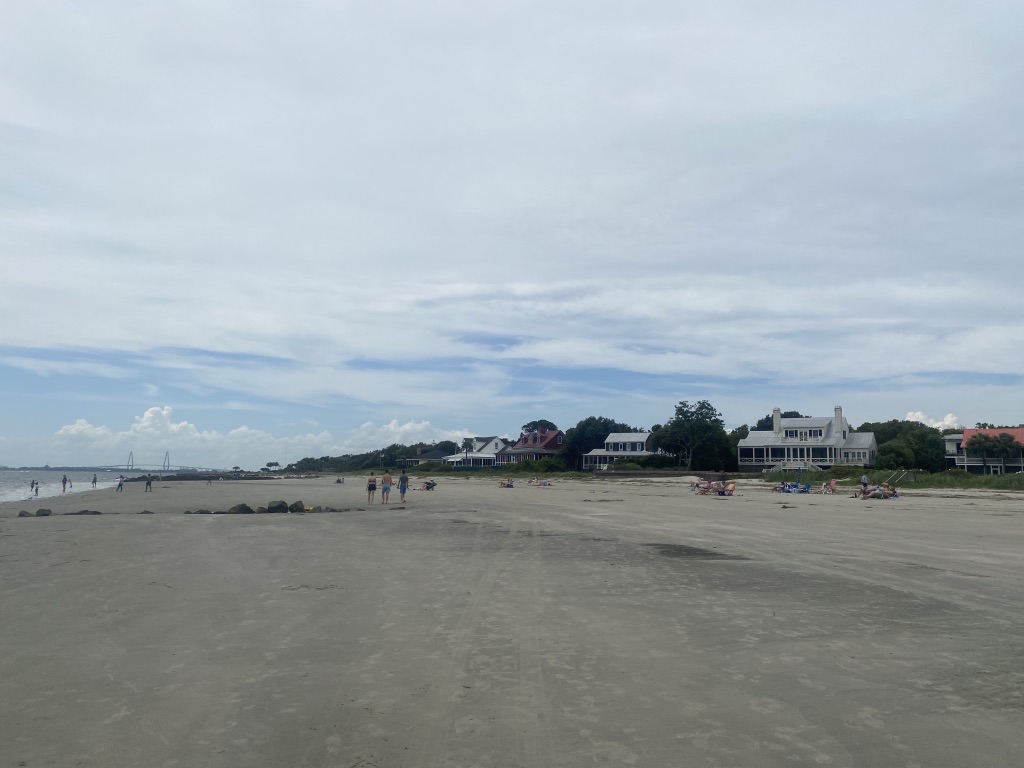
It was an incredibly sobering experience to stand ankle deep in that water and feel as if none of the other thousands of people on that island had any concern of what had happened there. Absolutely shocking beyond language.
Critical race theory is not a theory y’all. It is American history. It is our history and until we except that it is all of our history (AND present!) and not just Black history we will remain stuck.
I feel sick today and so damn sad. There are really so MANY and NOT ENOUGH words!
That is my soap box for today.
*A few more more pictures to come once I get my hands on Jays phone.
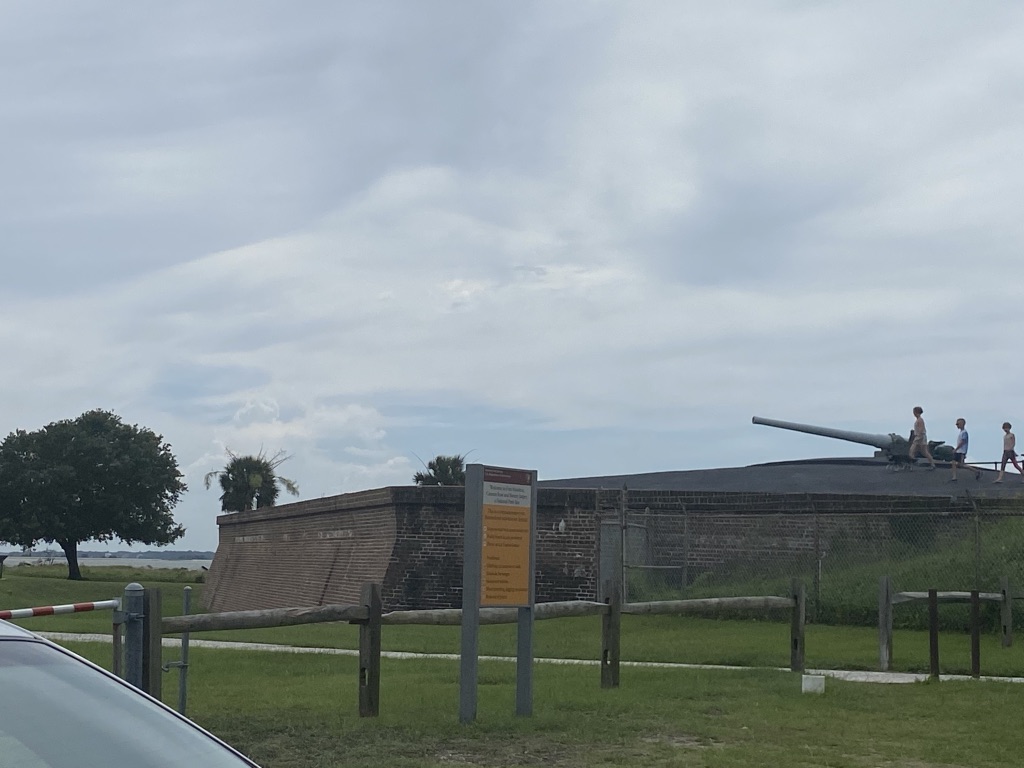
PS. Pictures of the fort and cannons in the background are just to give you the feel of the environment around the plaque. From what I understand no one knows the exact location where the ships would’ve been arriving on shore, but they did so for the entire 18th century.
Bench by The Road
In 2008 Toni Morrison Society dedicated a bench that had placed in an out of the way spot in 1999 on Sullivan’s Island to remind us of the injustice that took place on this piece of land hundreds of years before. “There is no place you or I can go to think about or not think about, to summon the presences of, or recollect the absences of slaves. No 300-foot tower, there’s no small bench by the road.”
Facebook post by Cassie July 13, 2021
The Atlantic Ocean is said to be the largest cemetery on earth. From what we learn somewhere between 9.5 and 20 million people were taken on the approximately 50,000 voyages from Africa to the Americas. Depending on what source I read somewhere between 30 and 50% of the Africans kidnapped did not survive the journey. This means it is likely that 2,000,000 to 10,000,000 people have found their final resting place at the bottom of the Atlantic Ocean along the middle passage.
For obvious reasons there is no exact number and we will never know the exact effect that the transatlantic slave route has had on humankind.
A crazy thing I never knew is that to this day sharks still swim the middle passage waiting for food – after hundreds of years of following ships that threw human bodies overboard – and many terrified captives threw themselves to Escape slavery. It changed the sharks instinctual migration.
They STILL swim that route today ya’ll!
What I do know is that I will never touch the Atlantic ocean again without experiencing a deep reverence, immense grief and deep connection.
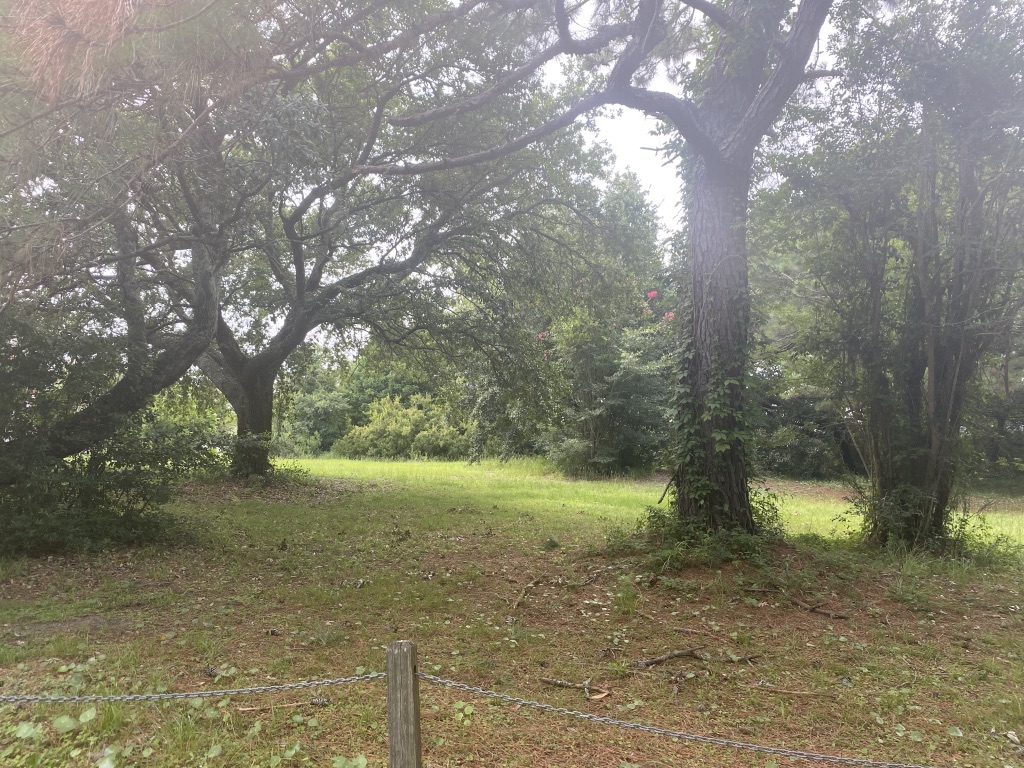
African American Cemetery
400-498 Station 22 1/2 St, Sullivan’s Island, SC 29402
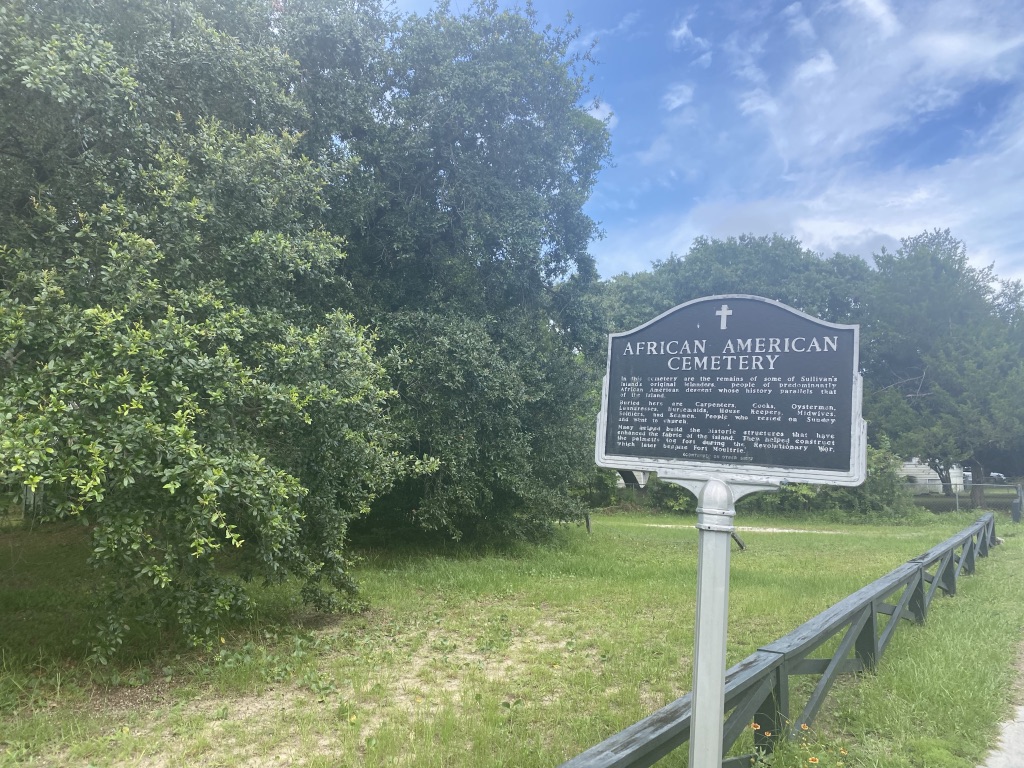
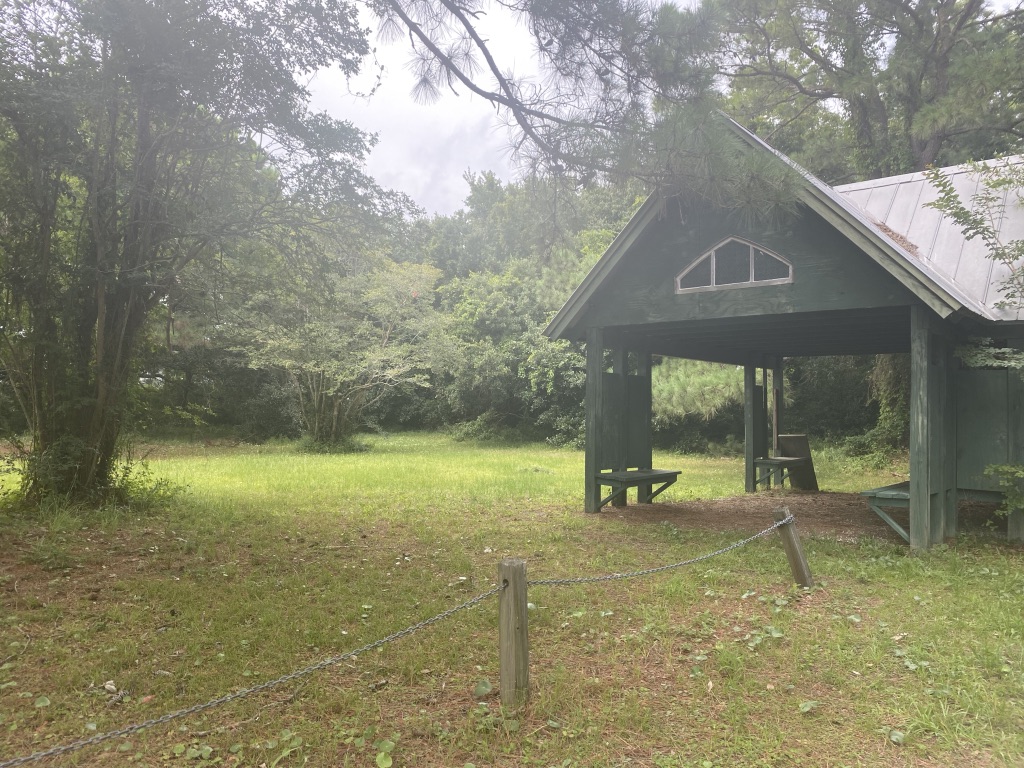
This was a difficult site to find and even harder to visit due to the bustling road and unkept, small parking lot adjacent to it. Most of the people buried here lay in unmarked graves and are remembered as simply, “carpenters, cooks, oystermen, laundresses, nursemaids, housekeepers, midwives, soldiers, and seamen.” They are the people who helped to build and maintain the structures on this now upscale island. The last funeral held there was 1948 and most of the graves were simply marked with a cedar cross.
 Black History Tour