
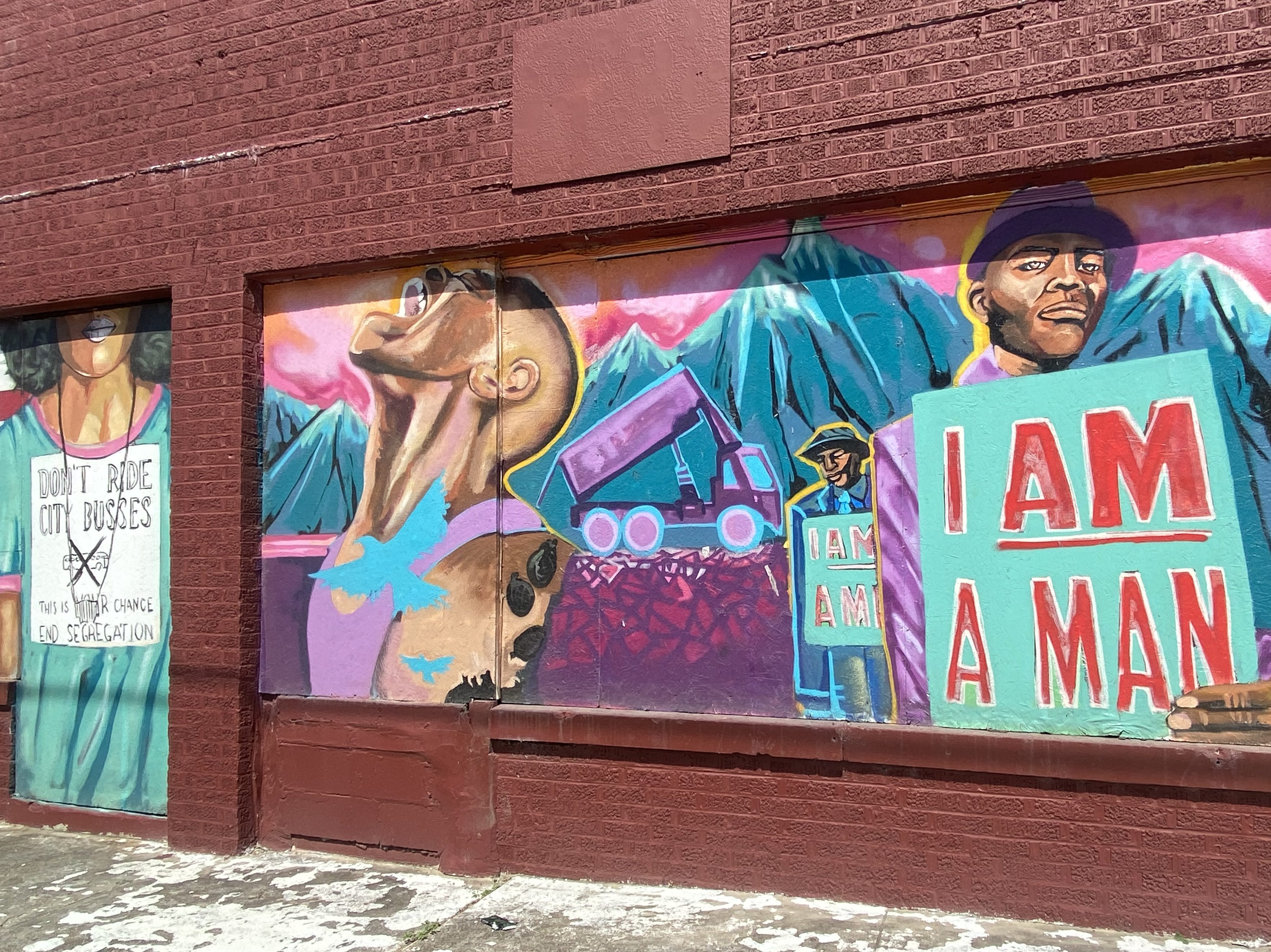
National Civil Rights Museum AKA The Lorraine Motel
450 Mulberry St., Memphis, TN 38103, (901)521-9699
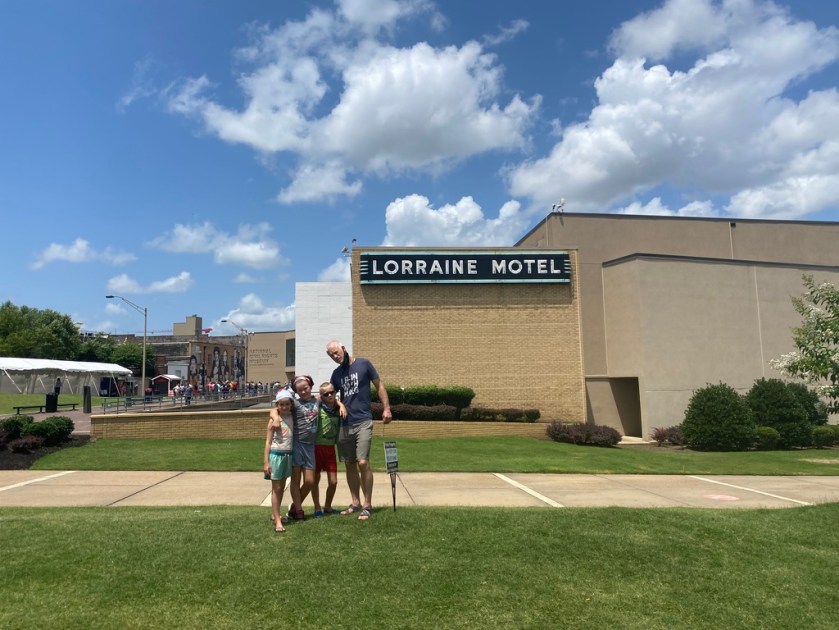
Timed Tickets Sold Online or at The Museum
Adults :18, College Students w/ ID: $16, Children (5-11): $15 Children under 5 and Active Military Officers: Free
This was our first stop and it exceeded our expectations and was really well suited for kids! The Lorraine Motel is the location of the assassination of Dr. Martin Luther King Jr. on April 4, 1968. He was standing on the balcony of his hotel room surrounded by friends the day after giving his final speech, “I’ve Been to The Mountaintop” at the Mason Temple in Memphis. If you listen to the speech it is striking how much he references his own mortality.
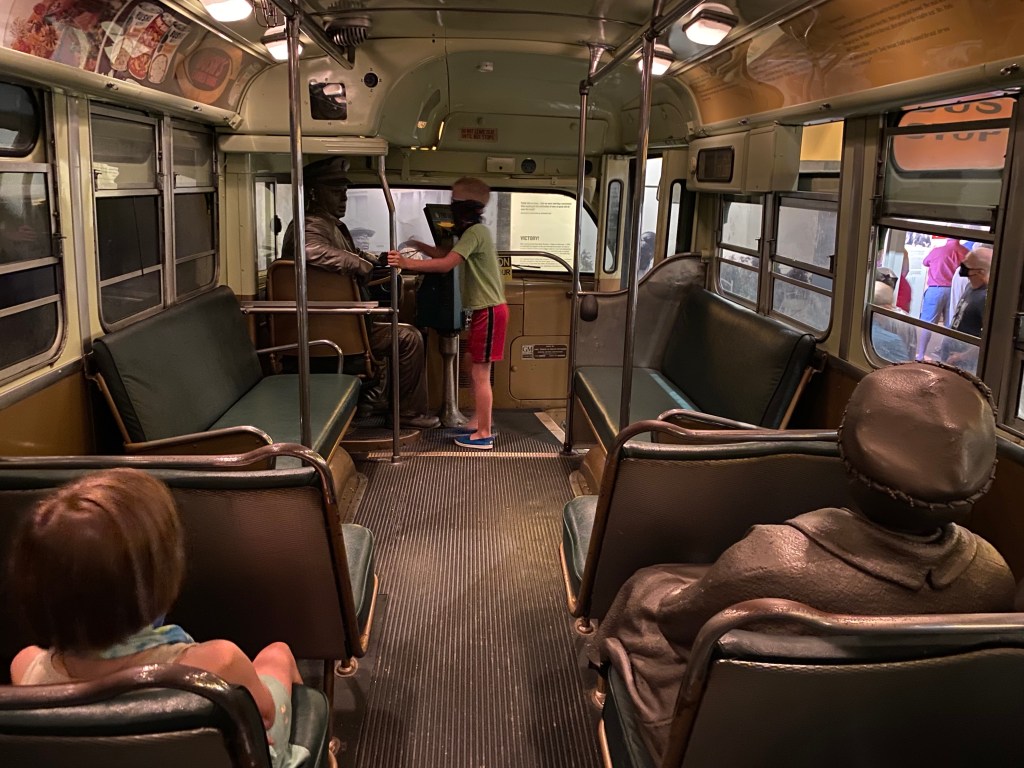
The museum is a tribute to Dr. King and also took us on an exploratory tour of the journey from Africa to the middle passage, slavery, Jim Crow and segregation to help us understand what Dr. King was working in opposition to during the Civil Rights era. It has life sized replicas of the Woolworth sit in and Rosa Parks on the bus during the Montgomery Bus Boycott in 1955.
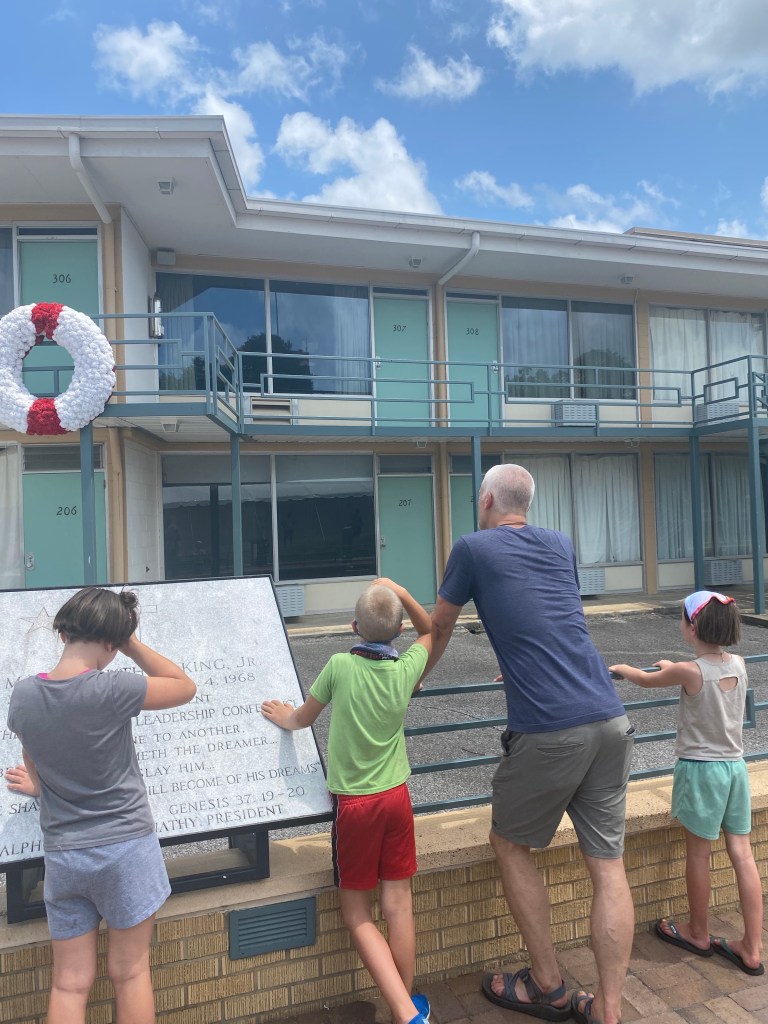

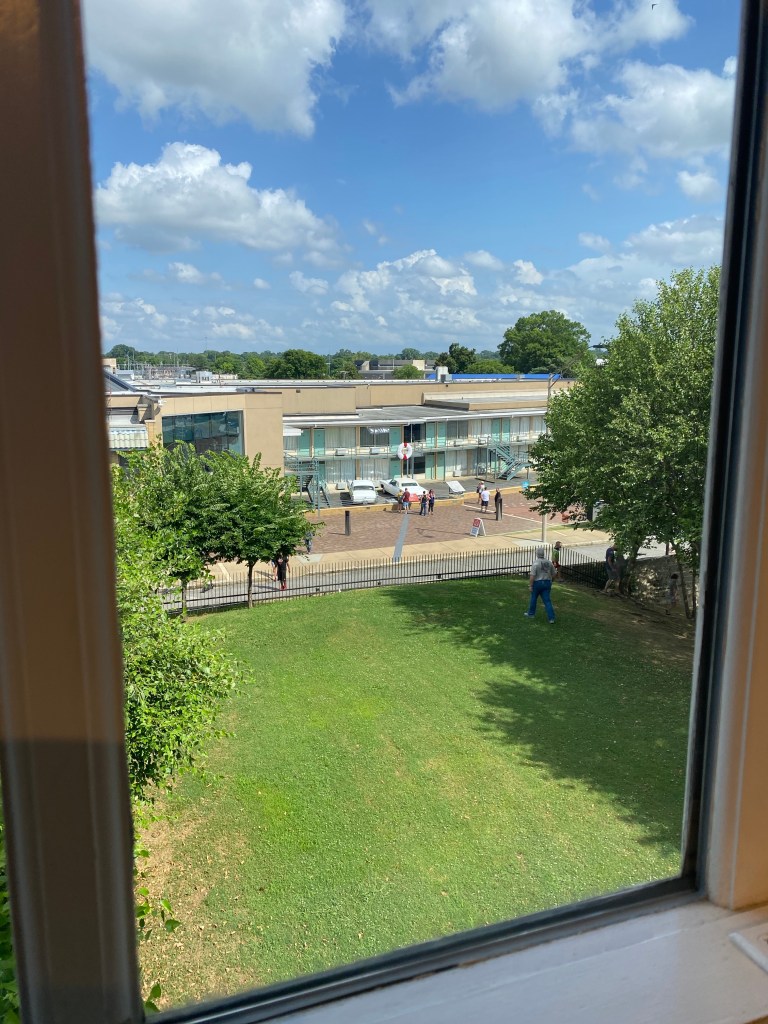
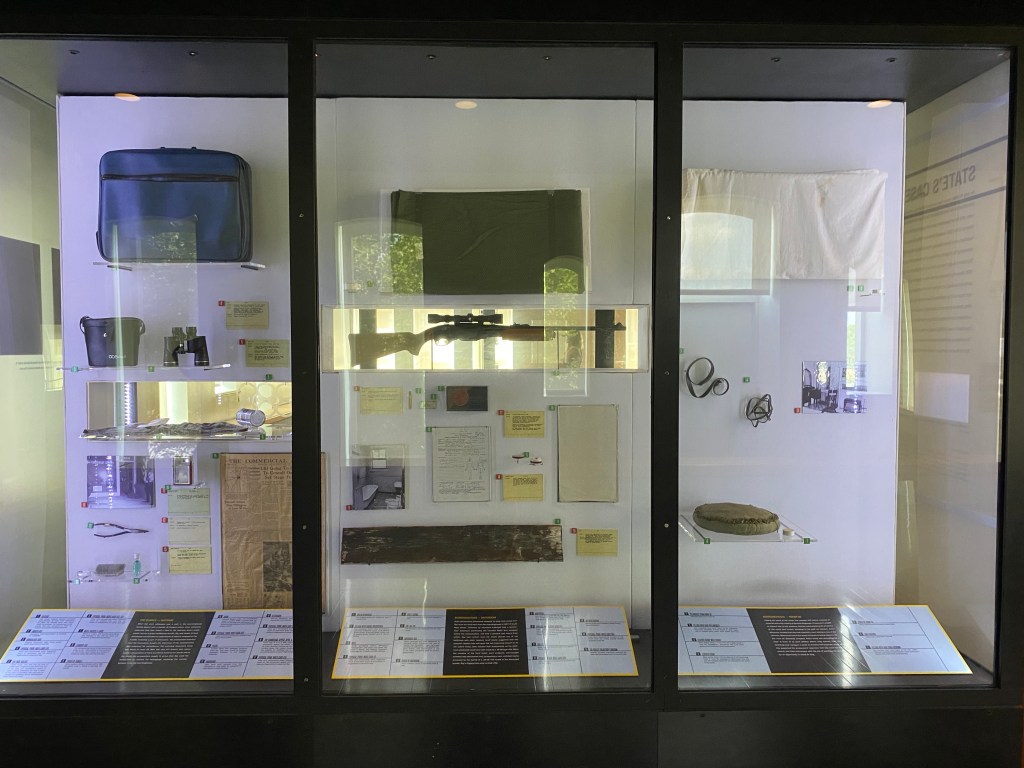
The fatal shots came from the boarding house across the street, which is also part of the museum and it portrays at length the search for answers about the assassin, James Earl Ray, and the theory believed by Dr. King’s own family that the FBI, or other law enforcement officials, were actually behind the murder.

Slave Haven Underground Railroad Museum
826 N. Second St, Memphis TN, 38107 (901) 527-3427
$12 for adults, $11 for college students, seniors and kids ages 4 to 17
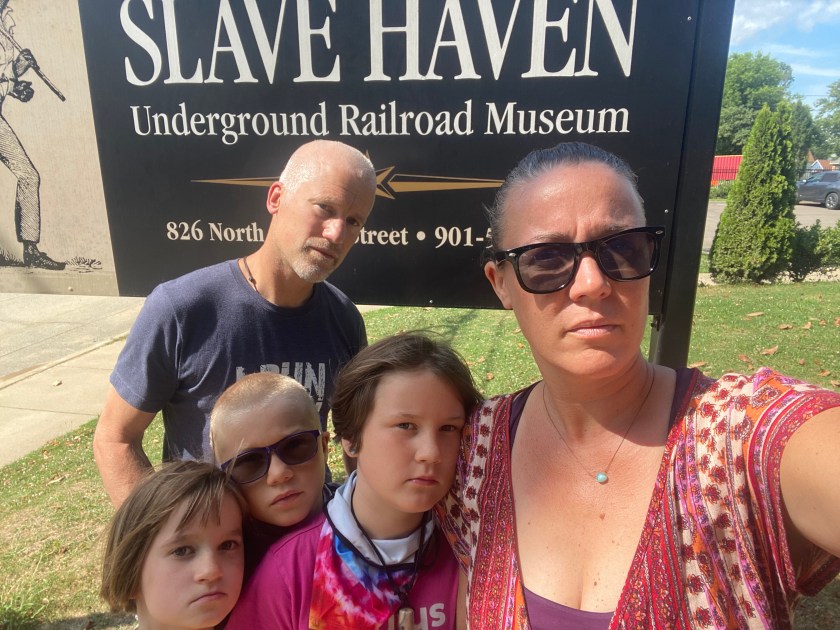
The Burke Estate, now known as Slave Haven Underground Railroad Museum, was once a stop for enslaved Africans fleeing work camps to find freedom in Canada. This Black family owned business is owned and operated by a mother and her two daughters. The tour included exploring the house, the highlight of which was going into the cellar where people would have hid until the safety of nighttime and stormy weather. We learned about the history of the transatlantic slave trade, saw art, artifacts and secret quilt patterns / symbols that were used to communicate without being recognized by neighbors. This was one of the children’s highlights of our 5 week journey. I think that the underground railroad leaves us with a sense of hope, hope that there are good people in the world. So much on our journey was devastating and dark, the idea that some enslaved folks would find freedom and that some allies were helping along the way gave us necessary hope that not all of humanity is evil.
930 Mason St, Memphis, TN 38126, (901) 947-9300
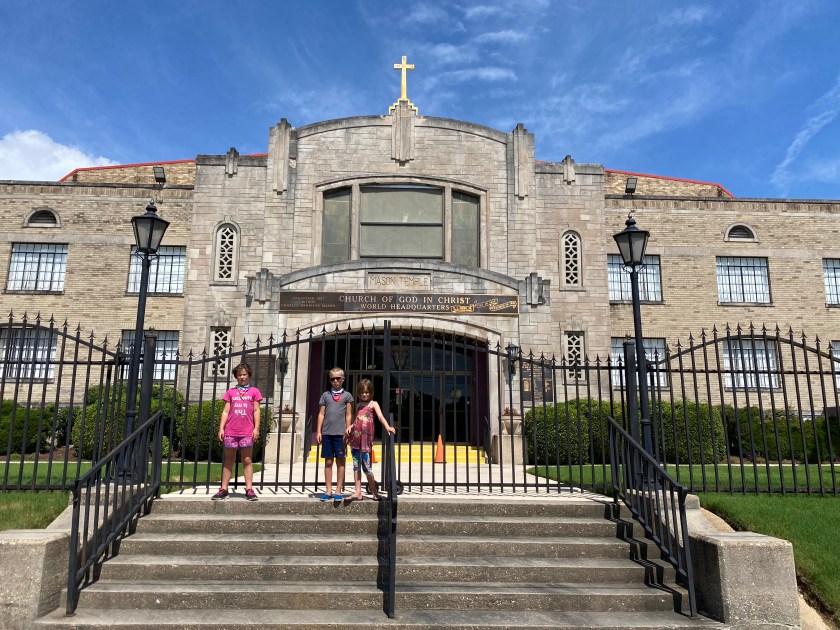
The Mason Temple is the Church where on April 3, 1968, the day before his death, Dr. King gave his “I’ve Been to The Mountain Top” speech. We listened in full to the speech from our car as we toured around Memphis and discussed the reason he was there, to protest with the sanitation workers who were fighting for humane working conditions and fair rights to unionize. Unfortunately, the church was not open when we weree there even though the website said that it would be. It was still a powerful site to see from the outside.
“I don’t know what will happen now; we’ve got some difficult days ahead. But it really doesn’t matter to with me now, because I’ve been to the mountain top. And I don’t mind. Like anybody, I would like to live a long life – longevity has its place. But I’m not concerned about that now. I just want to do God’s will. And he’s allowed me to go up to the mountain. And I’ve looked over, and I’ve seen the promised land. I may not get there with you. But I want you to know tonight, that we, as a people, will get to the promised land. And so I’m happy tonight; I’m not worried about anything; I’m not fearing any man. Mine eyes have seen the glory of the coming of the Lord.” – Dr. Martin Luther King Jr. April 3, 1968
Nathan Bedford Forrest’s Slave Auction and Antebellum Home Site

In this current day parking lot there are two historic markers. The first marker only acknowledged this as the site of the former home of Nathan Bedford Forrest’s estate, it made no mention that on the very same block was his thriving business, a slave auction. Perhaps you, like me, did not realize that Memphis was one of the most active cities in the slave trade in the 19th century? I assumed that most of the slave trading happened in coastal towns where ships were trafficking Africans directly into the Americas. I learned on this trip that after the importation of Africans from their home continent became illegal, in 1808, the domestic slave trade became a highly lucrative business for many white entrepreneurs. As you can imagine the breeding of Africans became common practice on plantations (which we now call “forced labor camps,” since that is truly what they were and the word “plantation” seems to suggest something glamorous, which it really was not for the enslaved captives who were forced to live and die there). But, I digress, since the end of the transatlantic slave trade Africans began being bred and sold between states and many public slave auctions began springing up in southern cities.
Although in 1826 Tennessee had prohibited by law bringing in humans “for the purpose of selling them or disposing of them…as articles of merchandise within this state”, in 1855 they repealed the ban due to an economic decline. The number of enslaved Africans who lived in Memphis was more than 3,000 but thousands more were transported in and out of the city on roads, rivers and railroads, most of whom would end up enslaved in work camps in the Mississippi Delta. This particular site, on the corner of Adams and BB King, was the first of many auction squares we would see in the weeks to come and most of them are now beautiful parks or outdoor markets, however, this particular site is currently a parking lot for a church in Memphis.
In 2018 a second historical marker was also mounted in this square finally acknowledging the significance of this site and its role in the history of American human trafficking. As another side note: you might recognize the name Nathan Bedford Forrest as the man that Forest Gump tells Jenny he is named after (in the movie Forrest Gump) and also as the first Grand Wizard of the KKK, two years after its founding.
Beale Street – Home of the Blues
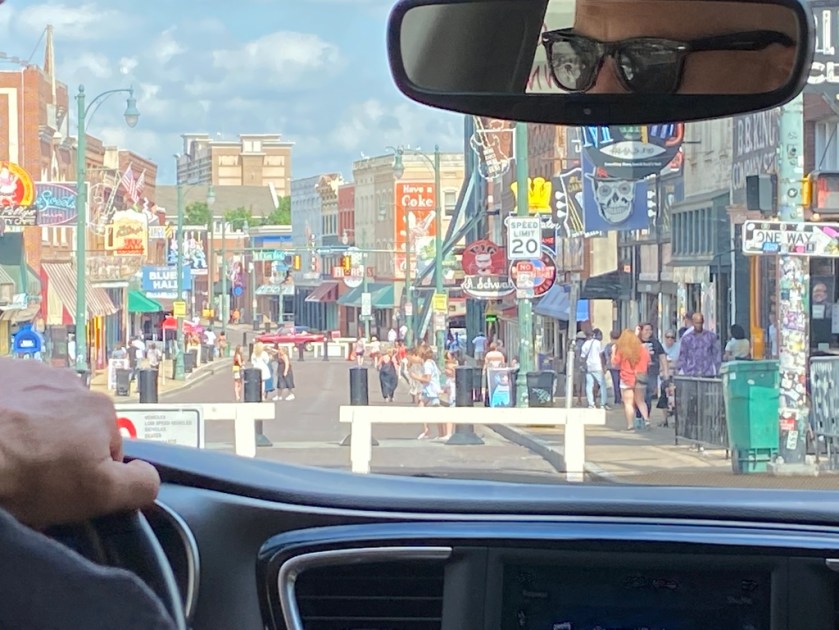
We walked down Beale Street, the home of Blues, established in 1841 as a thriving Black community. Beale street was once home to demonstrations, artists, musicians and was led by Black mayors. It was home to Ida B Wells’ headquarters of her anti-segregationist newspaper, Free Speech, and inspiration to blues legends such as Louis Armstrong, W.C. Handy, Muddy Waters and B.B. King. Today it is very touristy, but a must see, at least for a little stroll while in Memphis. .
 Black History Tour