
Hours: Visitor Center: 9:30am- 4:30pm, Tours: 10am- 4pm (last entry 3pm) 1 hour and 15 minute self guided tour
Adult: $25, Child (6-18): $11, Child (Under 6): Free, Seniors (62+): $23, Military/Student: $23, Parish Resident: $15
This was undoubtedly one of the most impactful stops on our journey. If you only have time to visit a few places this should be one of them. I must confess that the first time a friend suggested to me that this should be one of our stops I was off put. It felt somehow wrong to visit a “plantation”, like it would be glorifying this part of Black history. As I was sitting with this feeling I simultaneously received a message from an old friend, whose family actually bought the Whitney Plantation in 1999 and created The Whitney Institute. She graciously offered us tickets and we gratefully accepted. In preparation for our visit the kids and I watched informative videos to prepare us for the experience. I’m glad we did, it gave us some context and helped us to be in the right state of being when we arrived.
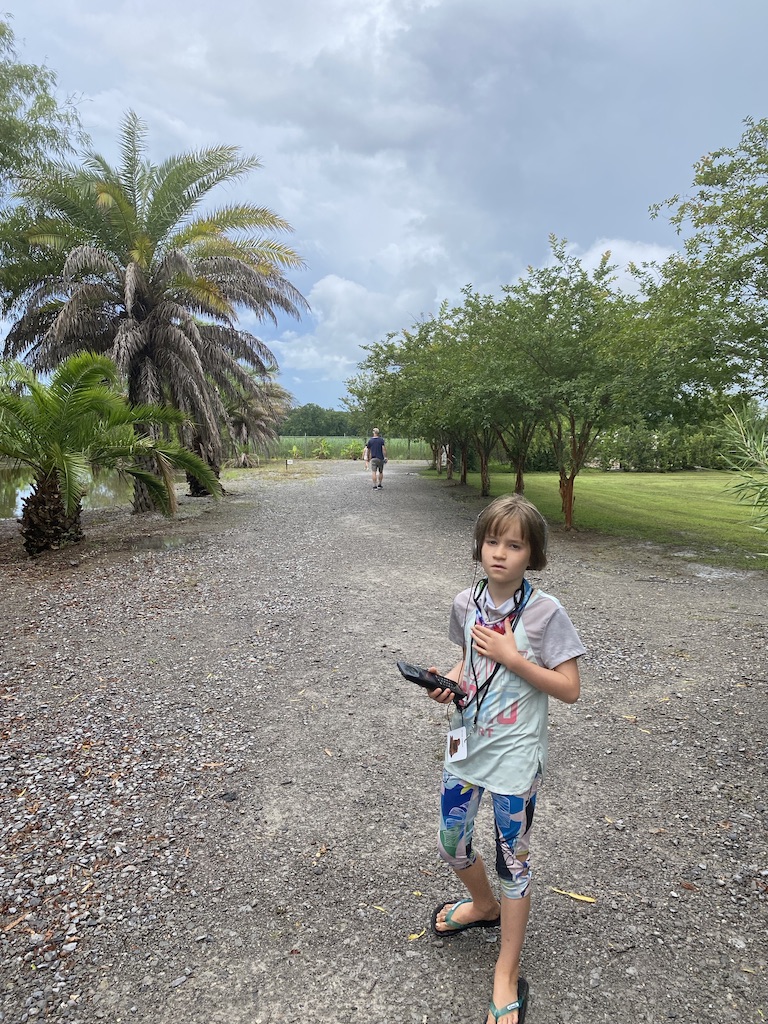
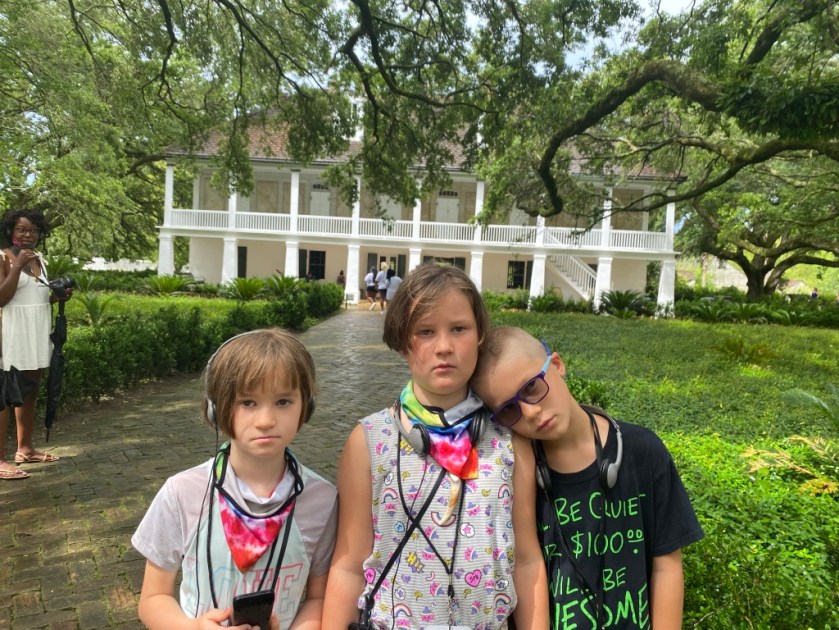
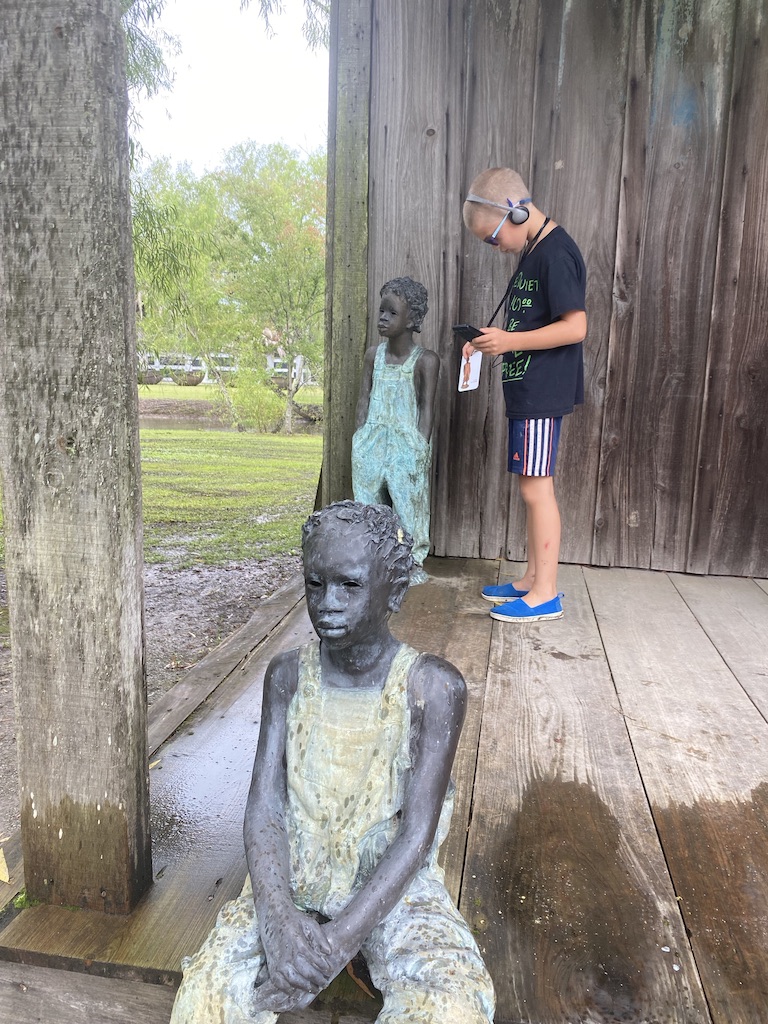
The Whitney Plantation is now an educational historic site that tells the story of lives in the camp solely from the perspective of the 350+ enslaved peoples who were held captive and forced to work there. The self guided audio tour directs you through the grounds, slave quarters and parts of the main house giving you details about life on the property, often including interviews with people who were once forced to work there.

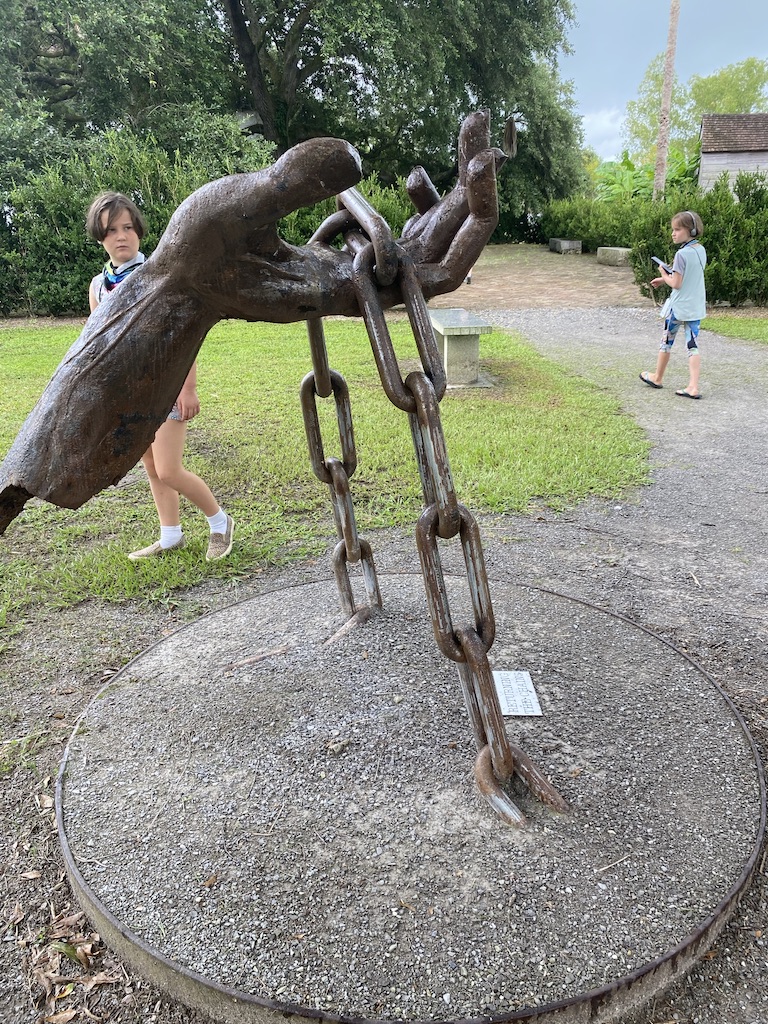
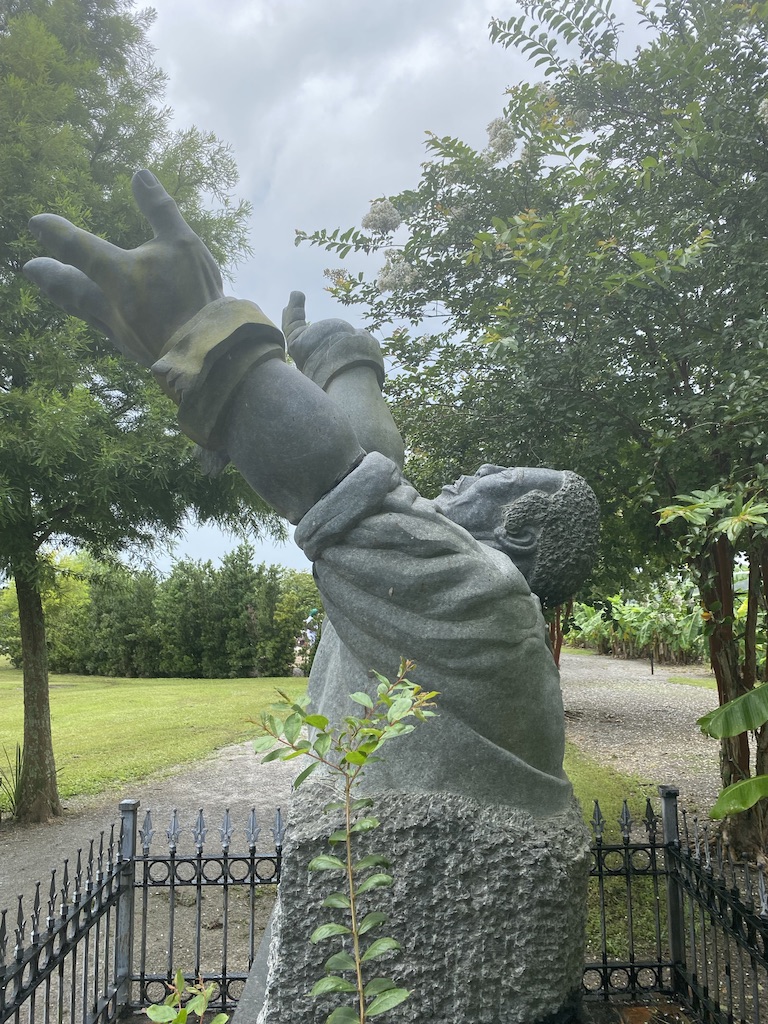
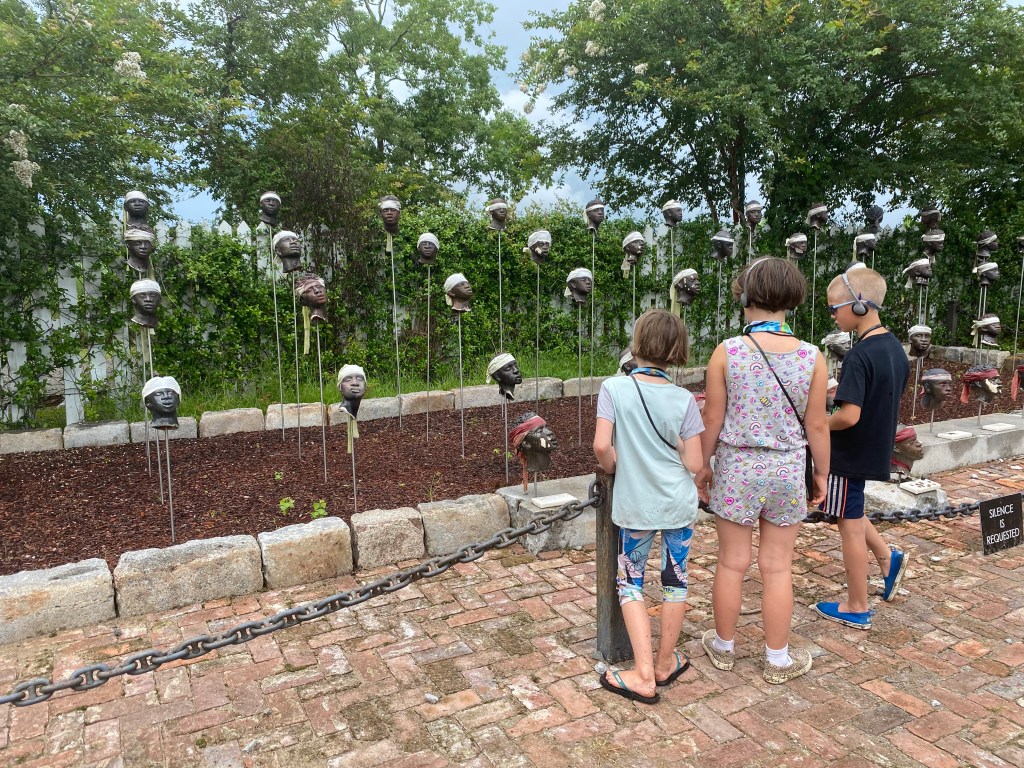
The grounds are also home to some incredibly moving sculptures. Preparing yourself, and your children if you are bringing them, was helpful since many of the sculptures were very emotionally triggering, such as the garden with stakes that had decapitated heads stuck on them in the above image. Something that would happen if an enslaved person attempted to run away to scare the other enslaved people from trying it themselves. Walking around the plantation it was difficult not to imagine how a person might try to run in the night, as we learned in the Slavehaven Underground Railroad, in a huge storm so that dogs would lose their scent. The grounds butt up to swamp lands ripe with alligators, water moccasins and other deadly wildlife, a fate that many would risk rather than staying on the plantation where they would be imprisoned, beaten, bred, raped and never with the possibility of freedom for them or their loved ones.
We learned that on a Sunday those who performed adequately and were submissive to their captor would be permitted to go to Congo Park (see below) on a Sunday to congregate with friends and family. It was shocking to imagine that there would be a Black slave-driver who would help the white overseer keep the other captives inline and would even physically punish those who were viewed as disobedient or lazy. Or to imagine being one of the wet nurses who were bred and had their babies taken away into slavery, but who had to raise the white children. Sometimes those wet nurses would be tasked with breast feeding infants that were bought at slave auctions knowing that they had just been torn from their mother’s arms and now they would spend their lives in slavery. At this point in the trip pieces of information were coming together for me like an intricate puzzle. I was starting to make connections from different places, stories and sites that were beginning to turn on like lightbulbs in my head. I was also diving into some of the most painful emotions I had experienced. The result of those feelings was almost an obsessive need to learn more, to find more pieces to complete the puzzle. The problem is the more I have learned the bigger and more complex the puzzle clearly is.
Jackson Square, AKA Place de Armes
701 Decatur St, New Orleans, LA 70116
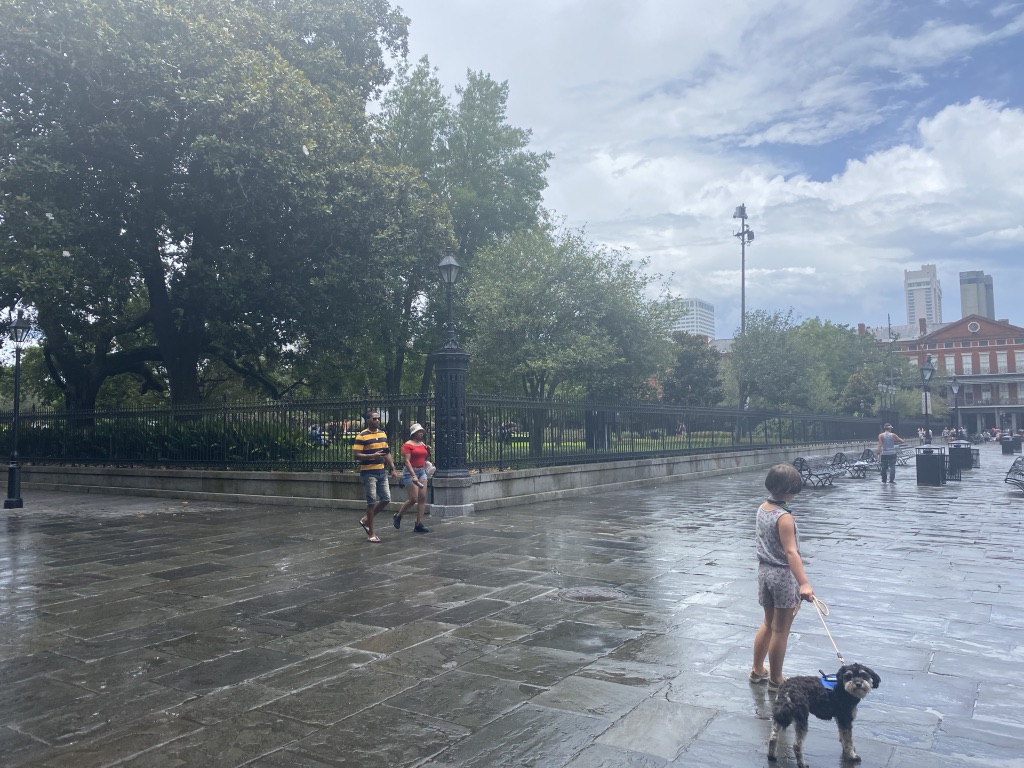
Not only is this square a bustling park full of music and artists, it was the site of the signing of the Louisiana Purchase. It was renamed Jackson Square after President Andrew Jackson and in the center of the square is a statue of Jackson riding a horse. The square is well known as an artistic center surrounded by many of New Orleans’ historical buildings located in the heart of the French Quarter. However in the 18th and 19th centuries it was the site of many public executions, aka lynchings. Following the largest documented slave revolt, referred to as the German Coast Uprising, three of the kidnapped captives who had tried to flee for freedom were hung in this square. They were then decapitated and their heads, along with other enslaved prisoners, were displayed on the stakes of the park fence and left to send a message of threat to the enslaved population. This, of course, circles us back to the Whitney Plantation and the stories of the enslaved people who lived and died there.
Congo Square, AKA Louis Armstrong Park
701 N Rampart St, New Orleans, LA 70116
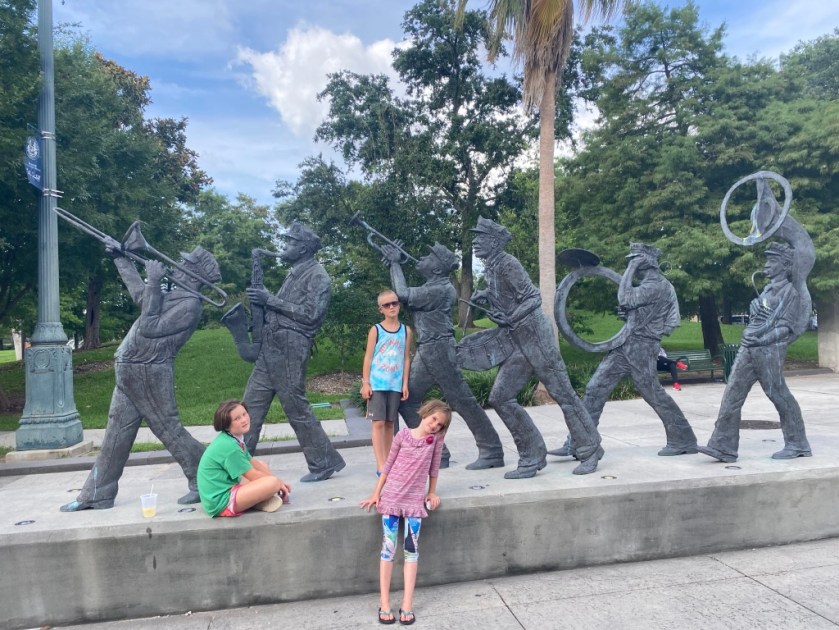
Like many sites in the south, this city park was an important site in the slavery era as well as during integration through the arts and music in the 1920’s-1940’s. Congo Square was a place that enslaved Africans and descendants of Africans would gather on a Sunday, a day that they MIGHT be awarded to visit with friends or lovers from other work camps (aka plantations) after church service. When we visited the square was full of drumming and Black artists selling homemade salves, kombucha and jewelry. It still felt like a hub of African American community and music. The park is also located adjacent to the Tremé neighborhood, birthplace to many of the most famous jazz musicians in NOLA. There are beautiful statues of a NOLA jazz band and of Louis Armstrong himself.
William Frantz Elementary School
Pauline St, New Orleans, LA 70117
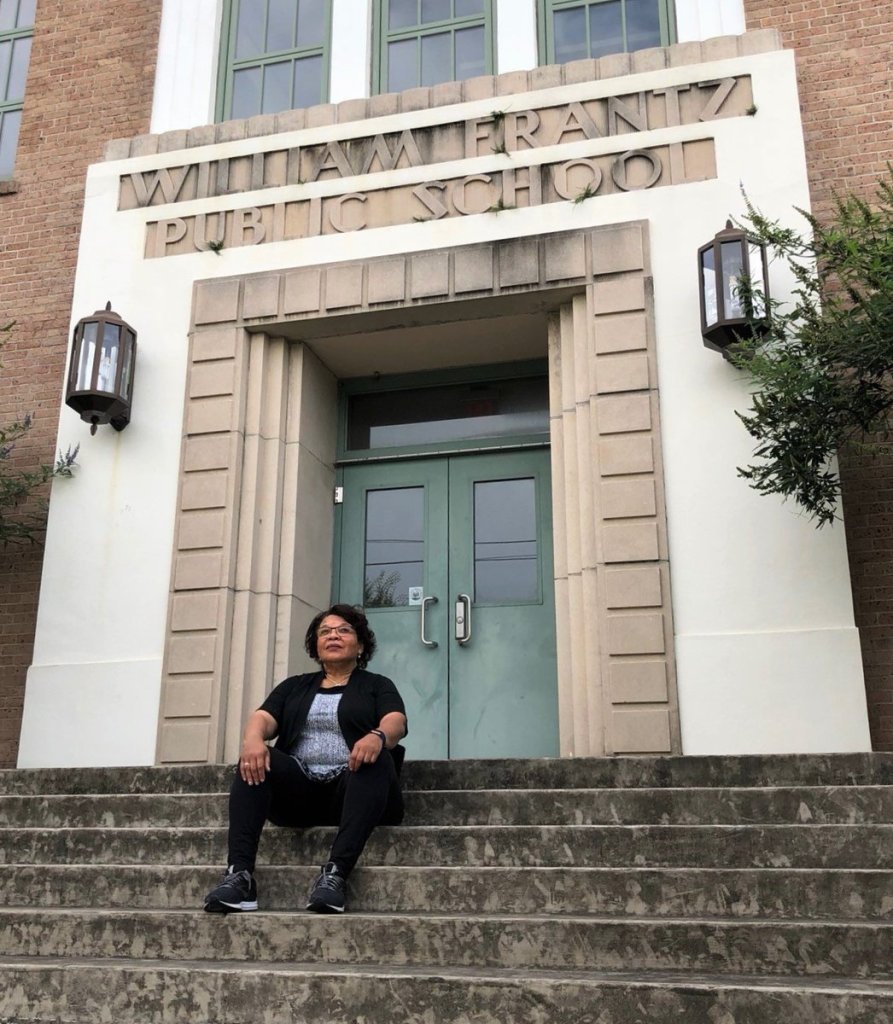
This is my big regret number two, number one being that we did not go out of way to pay respects to Emmitt Till in Money, Mississippi. I don’t know how we missed visiting the William Frantz Elementary School where Ruby Bridges was the first Black student to integrate into this segregated school in 1960. I was SO disappointed later when I realized that we had been only blocks away!
Because of her age, Ruby Bridges is one of the most heroic characters in the movement to integration. After Brown vs the Board of Education legalized the integration of public schools, Ruby Bridges was one of six children whose test score was high enough to be invited to attend a formerly all white school. At the age of six she was the first Black student to attend William Frazntz Elementary. Despite violent threats to her and her family she had the courage to continue to attend day after day, where she would be escorted by Federal Marshalls in and out of the building and to the bathroom any time she needed to go. She was the only student in her class that year because all of the white parents had pulled their children out of school in order to protest integration and to keep them from being in class with a Black student. However, throughout her first year some parents began sending their children back to school and by the second year at William Frazntz she no longer needed Federal Marshall escorts. In 1999 she formed the Ruby Bridges Foundation promoting tolerance, respect, and appreciation of people’s differences. Through education, the Ruby Bridges Foundation strives to end racism.
1138 Royal St, New Orleans, LA 70116
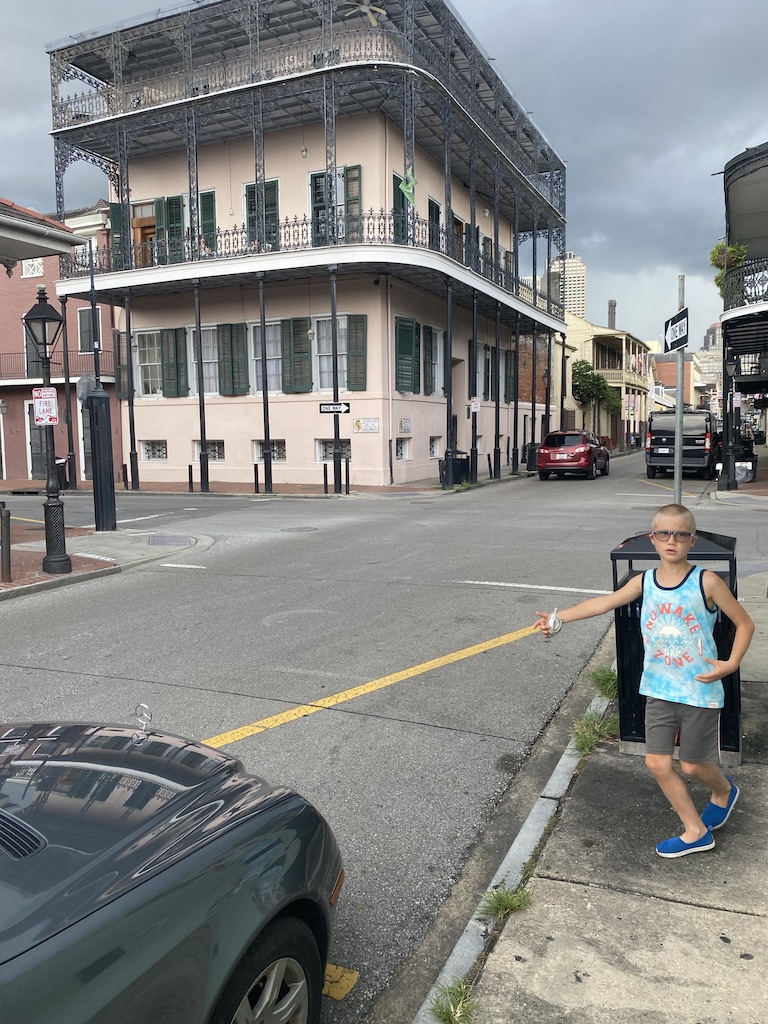
It is said to be the most haunted building in NOLA, and that’s saying a lot. It was the home of Madame LaLaurie in 1834. There was a house fire, said to have been started by one of the enslaved people who were being held captive there. Upon entering the home the fire fighters found humans who were being held in chains, violently abused and in some cases were horrifically murdered. Many residents of New Orleans sacked her home and she then fled with her family to France. This mansion today is said to be haunted by the many enslaved Black people who were tortured and killed by Madame LaLaurie.
 Black History Tour