

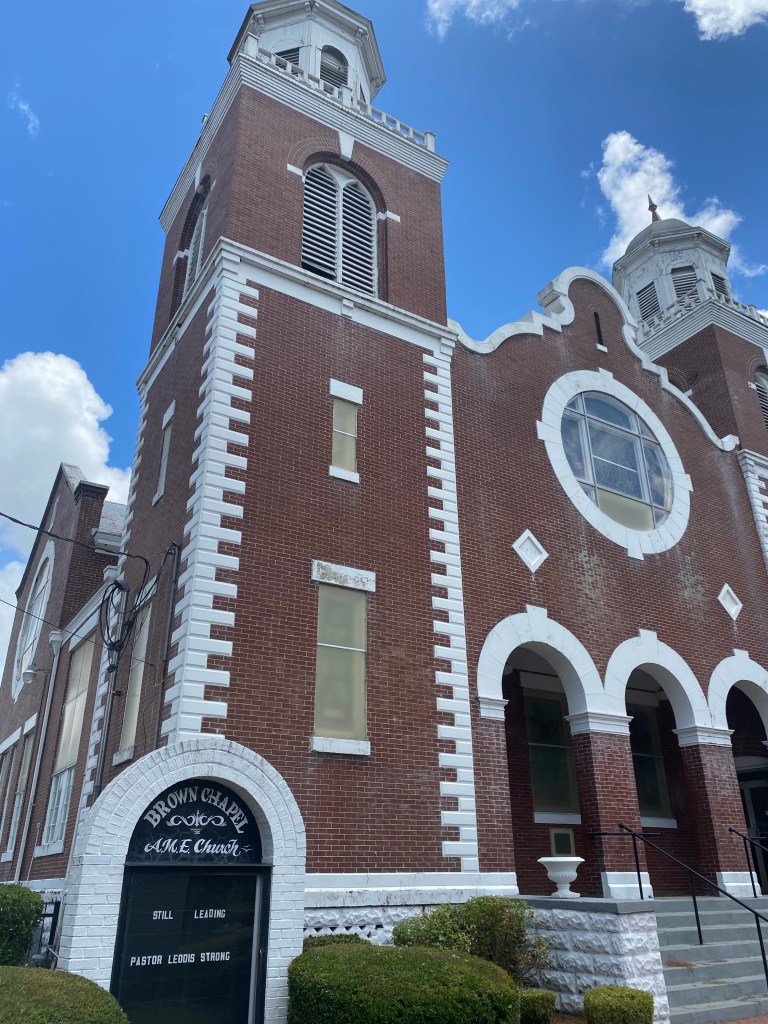
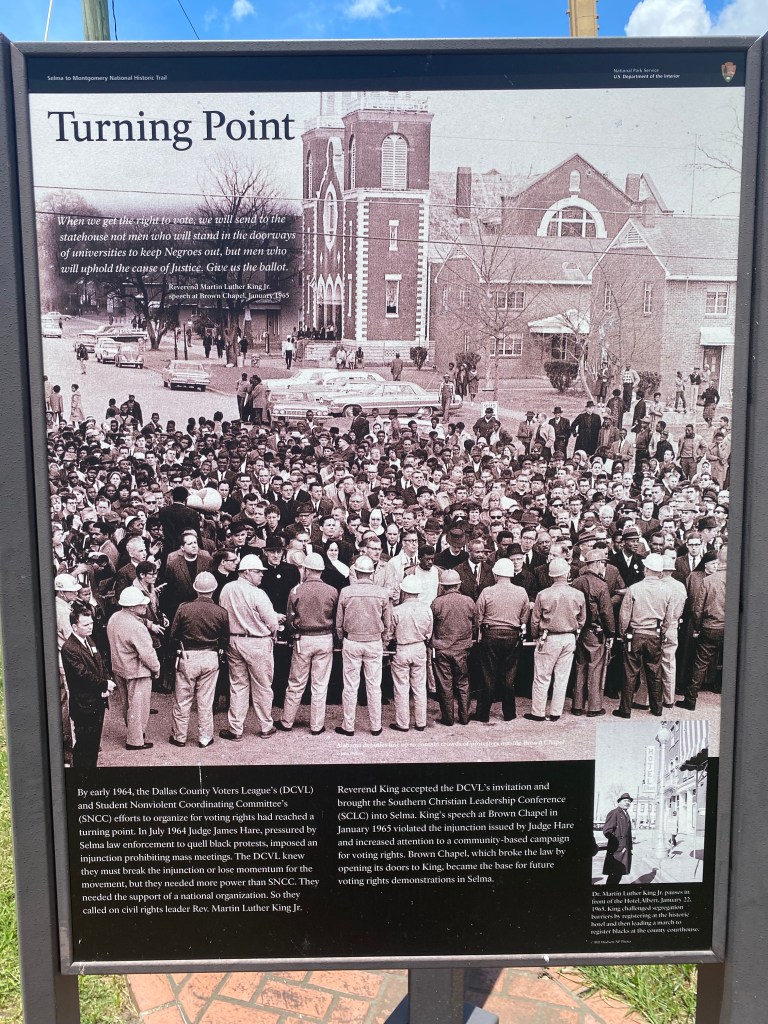
On the road to Montgomery we spent the day in Selma. I had heard the story and seen videos of the march from Selma to Montgomery, but like every other place we stepped foot it was an entirely different experience standing outside two of the churches where the march plans were being laid. I honestly had no idea that the march from Selma happened 3 different times. I had heard about Bloody Sunday but never really absorbed the history. Not in its full context. The marchers were simply seeking an equal right, the right to vote, which at the time only 2% of Black Alabama residents had, through a non-violent demonstration, a 54 mile walk in wet weather in springtime in Alabama.
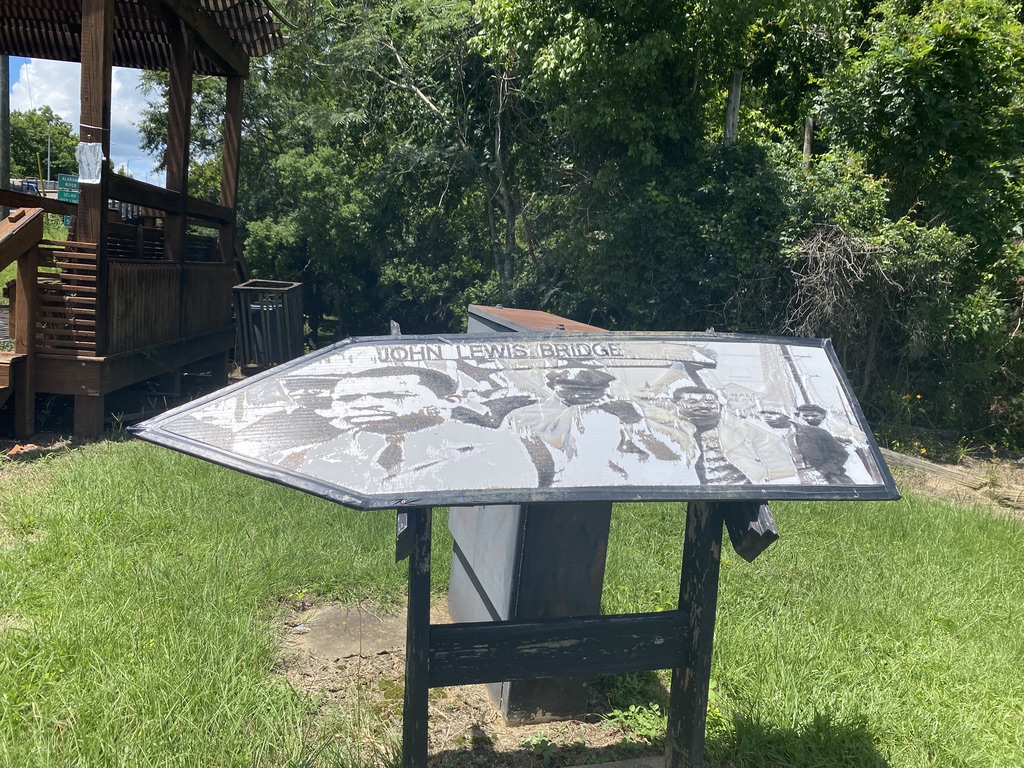

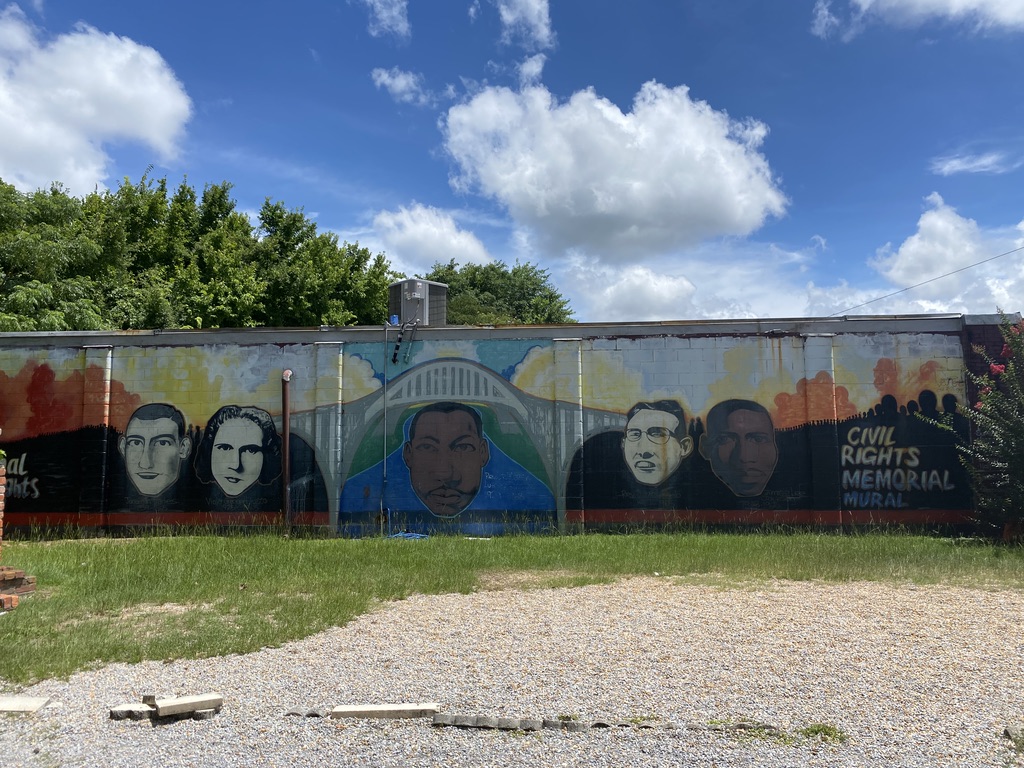
On March 7, 1965 Hosea Williams (leader of the Southern Christian Leadership Conference, SCLC) and John Lewis (leader of the Student Non-violent Coordinating Committee, SNCC) led the march of 600 people beginning at the Brown Chapel African Methodist Episcopal (A.M.E.) through Selma and across the Edmund Pettus Bridge. The demonstrators were met by Alabama law enforcement, as well as civilians, who were ardently against giving African Americans the right to vote. When protestors were told to turn back and refused they were beaten by the angry crowd with nightsticks, whips and tear gas. Hence the name of this horrific event as, “Bloody Sunday”. However, the event was not entirely in vein, because the beatings were caught on film and broadcast on national television the nation saw first hand the upsetting events taking place in Selma. President Linden Johnson came out on TV with a public statement of solidarity and an announcement that he would be signing the
The second attempt to march to the capital of Alabama happened two days later, on March 9. This time Dr. King had come to lead the march and after making it across the Edmund Pettus Bridge for the second time the protestors again encountered troopers and police officers. Dr. King led them in prayer and instructed the protestors to turn around. That night a group of white men beat and murdered activist and Universalist minister from Boston, James Reeb. In response to the violence of Bloody Sunday and the murder of James Reeb, on March 15th President Johnson’s administration held a televised conference with congress to introduce a new federal voters rights law to enable African Americans the right to vote without harassment. With the nation in shock, many demonstrations occurred around the country and people flocked to Selma to join the third march on March 21. Although Alabama Governor Wallace refused to protect the marchers President Johnson agreed to do so. So, with the protection of 1,900 Alabama National Guards, federal Marshalls and FBI agents the protestors walked 10 miles per day in the cold and rain along U.S. Route 80 to Montgomery. At night they would sleep in fields or on the lawns of churches. Over the course of the march the protestors were joined by activists from all around the country and on March 25 over 25,000 marchers entered Alabama’s capital city of Montgomery in support of Black voters rights. On August 6, 1965 the American Voting Rights Act became law and Route 80 between Selma and Montgomery is now known as a National Historic Trail.

 Black History Tour