
Our Route
3 Days: Memphis, TN
Stop in: Jackson, MS
3 Days: New Orleans, LA
1 Day: Mobile, AL
1 Day: Selma, AL
5 Days: Montgomery, AL,
1 Day: Birmingham, AL
Stop at: Tuskegee AL
3 Days: Atlanta, GA
2 Days: Savannah, GA
2 Days: Charleston, SC
1 Day: Raleigh, NC
2 Days: Richmond, VA
1 Day: Chesapeake Bay, VA
2 Days: Washington DC
1 Day: Philadelphia, PA
2 Days: Newport, RI
1 Day: Boston, MA
5 Days: Cape Cod, MA
4 Days: New York, NY
Our family decided to take a trip to the Southern states in the winter of 2019, before Covid 19 and a global pandemic. We bought our tickets and had a rental car booked for a one month trip. However, looking back I am so glad that our trip didn’t happen until 2021 because of what we had to learn and experience in 2020. We had the privilege of time and the opportunity to engage in community activism and watch the unveiling of racism center stage in our community, country and globally.
The trip that I outline on this site was the most educational 5 weeks in my life, I am forever changed. I learned things about American history, about myself and about human nature that will forever be ingrained in my soul. I am sharing it as if it is an intimate journal in the hopes that some who read it might also find moments of newness and with the thought that it might inspire others to visit some of the places and people that we encountered along the way. Many times the monuments, memorials and museums were shockingly run down due to lack of funding. I hope that others will start to pay homage to these “holy grounds”. If our society recognized these places with the sacredness they deserve they might have the resources to be better maintained by our government, and in many cases, given some funding and respect by the very wealthy communities in which they live. The disparity between Black history and the white wealthy communities in which the historical sites exist was shocking beyond words. If you are able to contribute to any of the historical sites please find their links to information on the page about them.
This journey took us from the first stop at the Lorraine Motel in Memphis, the site of the assassination of Dr. Martin Luther King Jr and the home of Blues at Beale St. We visited the homes of several civil rights heroes, Medgar Evers, Rosa Parks, MLK, Malcolm X and Langston Hughs. We visited huge houses that were work camps for imprisoned Africans, AKA plantations, that now tell the true stories about those who were held captive there. We paid our respects to cemeteries full of unmarked graves where Africans and decedents of Africans were buried or dumped. We huddled in cellars that were used to hide enslaved people who were fleeing through storms in the night to Canada for their freedom on the underground railroad. We stood at the most devastating sites were boats unloaded Africa captives during weeping times as those who survived the horrors of the ocean voyage were ripped apart from their families. We walked through buildings that were warehouses that stored stolen human beings and auction blocks were people were sold. We visited once thriving Black neighborhoods that are now devastated after the construction of major freeways. The last stop of the journey was the last room Malcolm X ever took a breathe in. And all along the way we held the sanctity of the Atlantic Ocean. The largest mass cemetery on earth, the middle passage, where money meant more that human life. The journey that caused an entire race of humans to be cut forever from their lineage.
There are truly no words for the evil that humans are capable of. And if we cannot face the truth how can we ever do better?
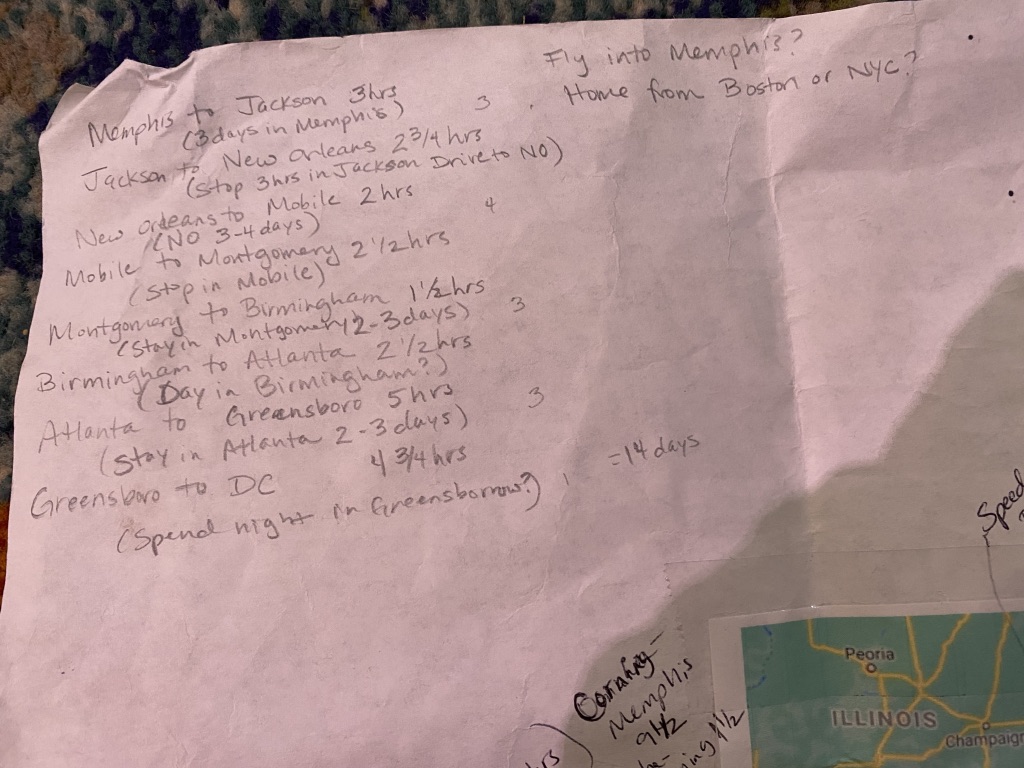
Calculating Drive Times
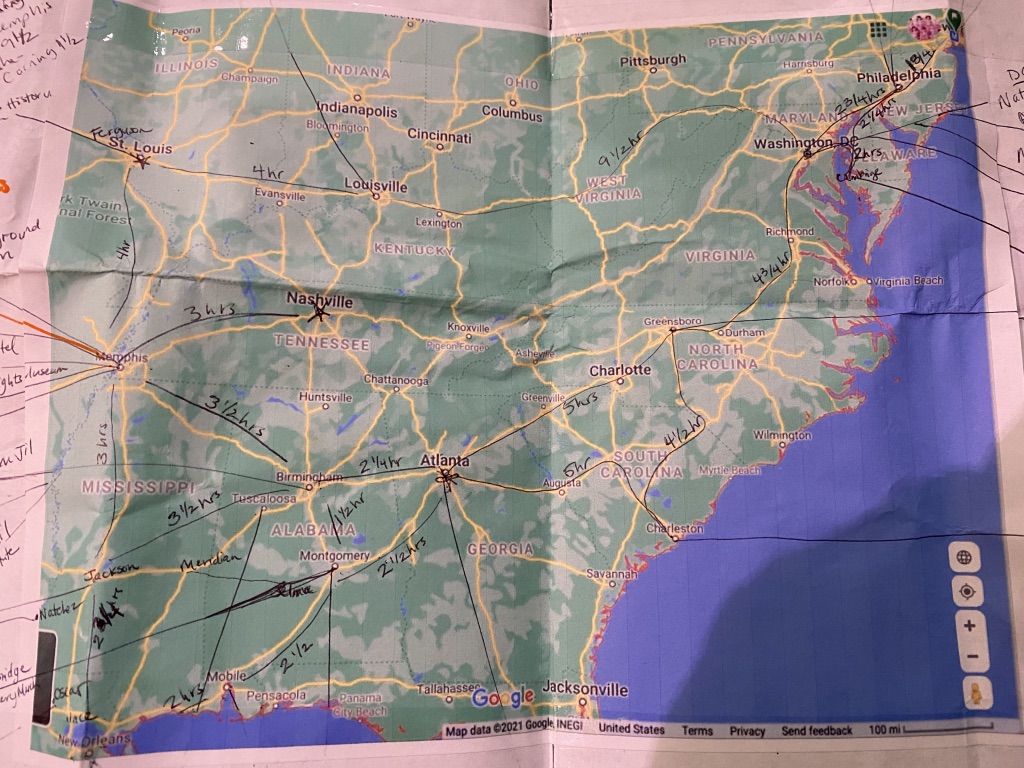
In order to plan the most efficient route I spent quite a lot of time googling the distance between each stop on our trip. In the end most days entailed more driving than we planned because of traffic or unexpected stops along the way.
The minivan we rented at the airport in Nashville and returned in NYC served us very well. We calculated that we drove between 4,000-4,500 miles at the end of our 4 weeks of car travels.
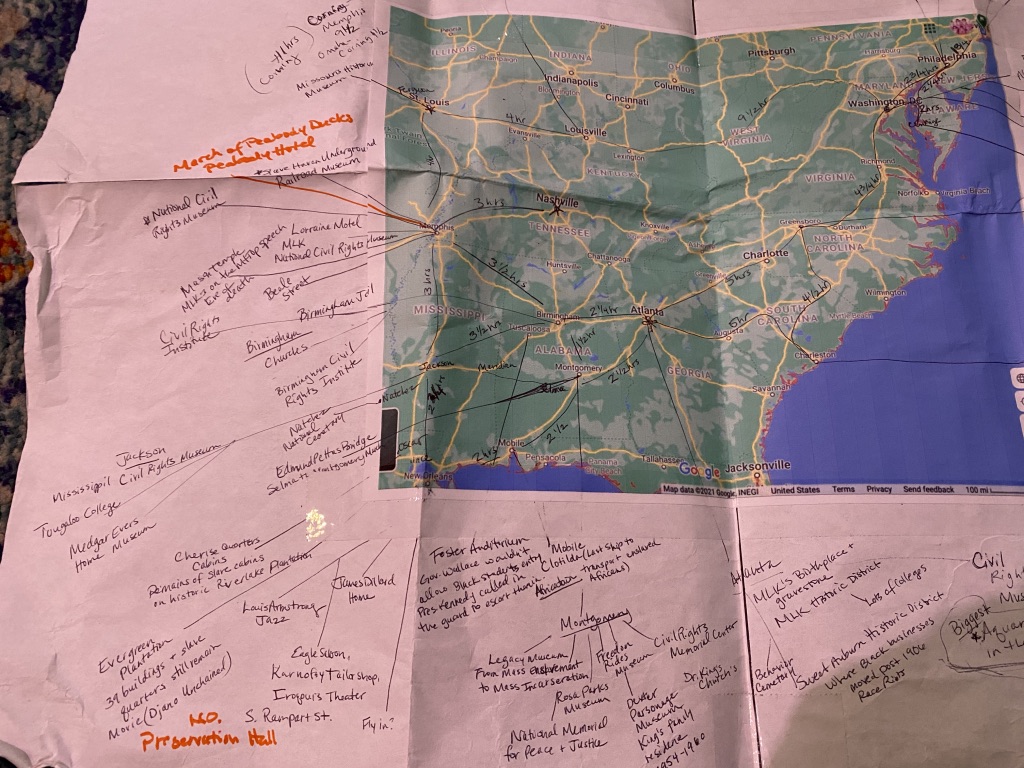
Researching Destinations
Researching for trip was really the beginning of the journey. Starting to explore Black history through learning about important neighborhoods, inspiring leaders, universities and churches began my understanding of this history that I had not learned about in school.
On of the things that really surprised me was how many churches held deep significance for the Black communities that lived near them.
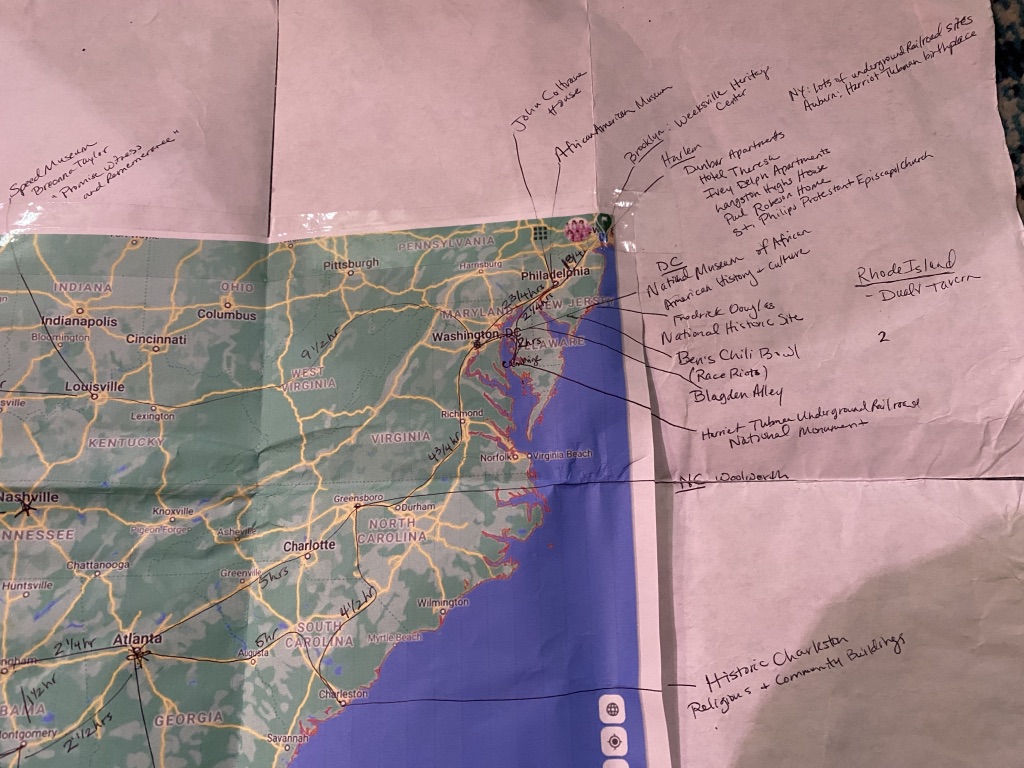
Northern Surprises
As we ventured up the east coast I was quite shocked how much happened in the northern part of the east in relation to the slave trade. Harlem had always called to me, the activism, art, music and dance, but learning about the importation of Africans into New England and thee exportation of indigenous from the same shores was quite shocking to me. I had always assumed that New England was a safe area for African American people, but the more I learned the more I realized that American is void of such places.
Planning
First I should warn you that we are not planners. Jay and I love to book a flight and a rental car and go. We did a lot of that, but due to the nature of this trip there was a bit more planning than usual. AND, there was a lot of googling from the road, asking as we went and sheer luck.
One of the upsides to not being planners is that we had the freedom to stay a day longer or leave a day earlier depending on how we liked each location. When we left for our adventures we had only booked our hotels through Montgomery, where we actually added 3 extra nights. The rest of the trip we made up day by day. We had also packed sleeping bags and our tent for added options, however we found that many places were so buggy it was less appealing to camp. And of the course the down side to camping was that we missed time exploring the cities we camped outside of.
To plan for this trip I got kind of artsy. As you see above, I printed a map that went from New Orleans in the South Western corner to Boston in the North Eastern corner. I began researching civil rights sights and found that many resources would point to the same museums, churches, cemeteries and markers. So I glued the map onto a large piece of white paper (well several pieces of white paper taped together) and I drew lines from each location out onto the white paper to map out the sites we might want to see. Not being someone who draws maps in my head like my husband Jay, this helped me to visually see where the clusters of sites were and the potential routes to get to them.
I had questions about Black history that I would come to better understand along the way…
Why were so many churches listed? I know that Dr. Martin Luther King Jr was a baptist preacher, but I was baffled by the fact that Christianity had such a sacred place in Black history. After all hadn’t we, as in my white ancestors, stripped away African religion and culture and imposed Christianity? More on my thoughts on throughout the trip.
How easy would it be to find some of the important sites, such as slave auctions, underground railroad locations etc, and could we go inside?
How would all of this be for the kids? And, what activities would be helpful to break up the emotional heaviness of truly looking at America’s history of anti-Blackness and violence?
So many cemeteries, once thriving Black neighborhoods and colleges to visit – would these actually be interesting?
What would be open during a pandemic?
As you will gather from the outline of our trip it could really be done in any order, or as multiple trips. We spent time also calculating drive times and that is what determined where we would fly in and out of. And, of course there are important sites to see in many states that we did not explore on this trip. There were also sites that we did not make it to that I wish we had and I will give you the information about those so that you can explore them if you want.
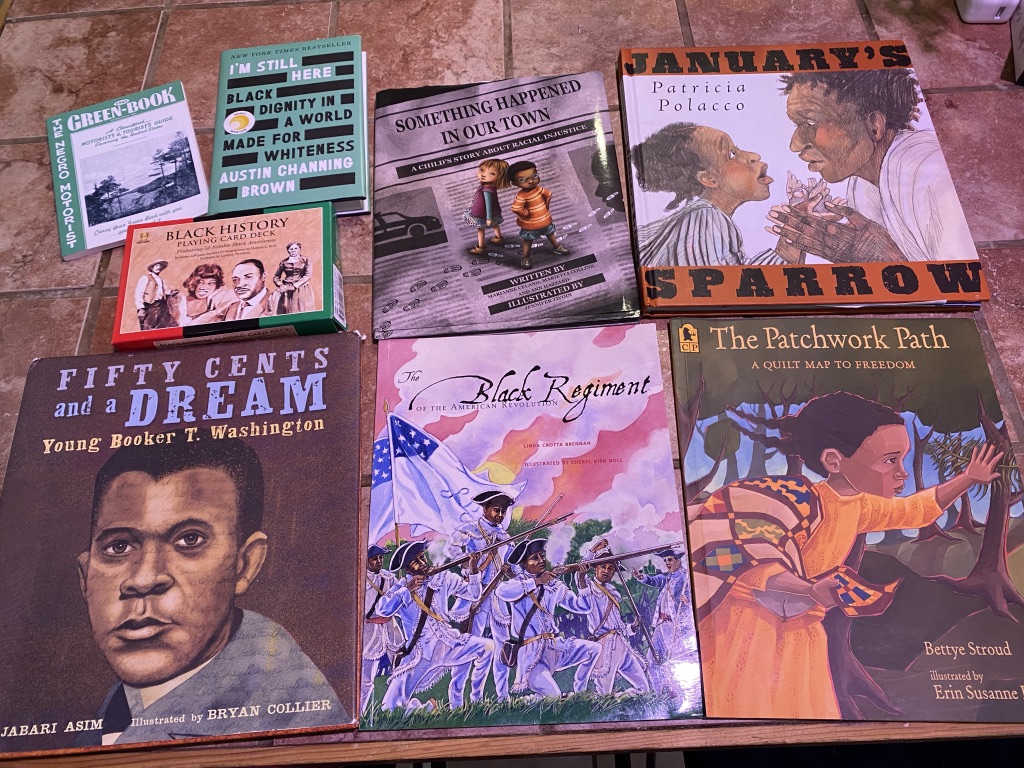
Books I collected along the way.
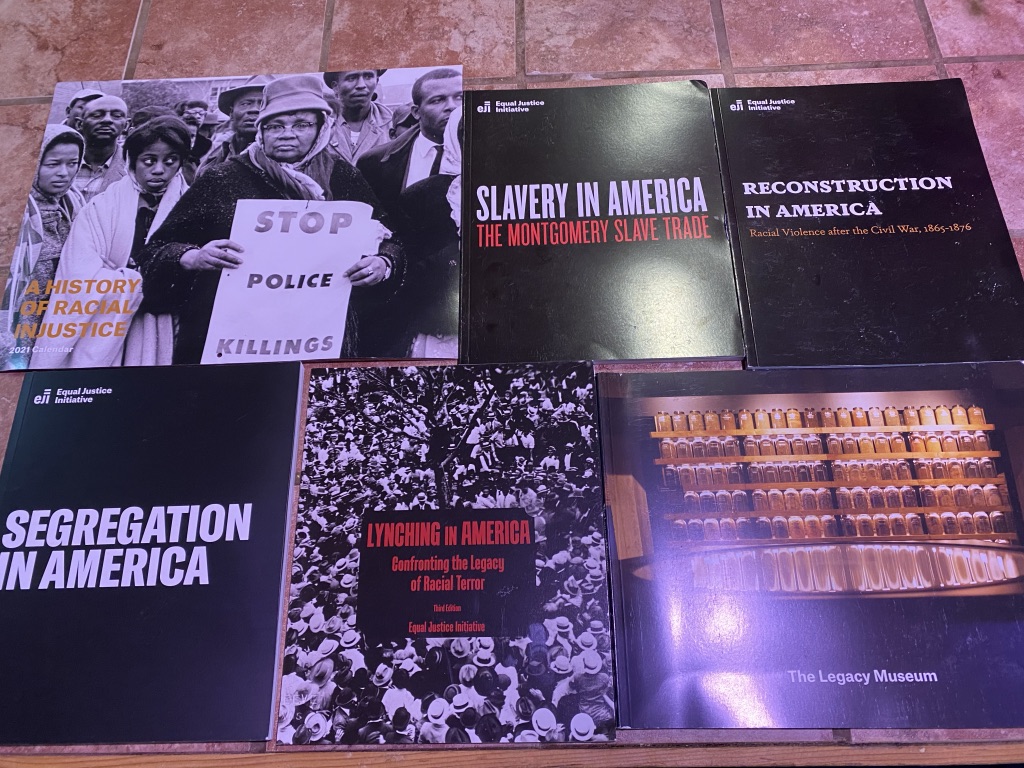
Books from EJI (Equal Justice Initiative).
“I have discovered in life that there are ways of getting almost anywhere you want to go, if you really want to go.”
― Langston Hughes
 Black History Tour